
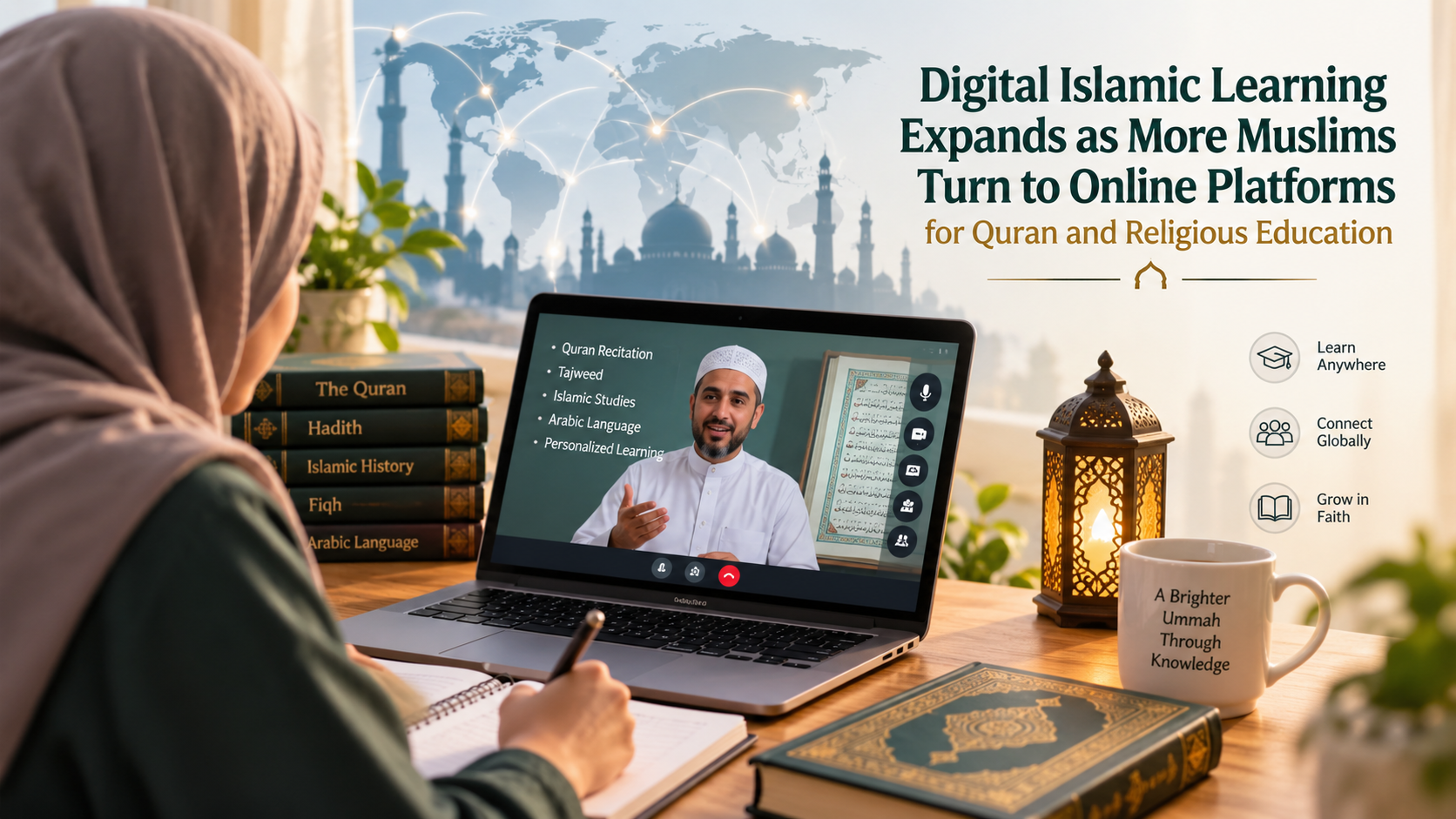
In today’s connected world, learning is no longer limited to a classroom, mosque, or local study circle. Muslims around the world can now access Quran lessons, religious lectures, and answers to everyday faith-related questions from home. This shift is making Islamic education more accessible, especially for people with busy schedules or limited access to local teachers. One growing area is Islamic Question answer, where learners can explore religious questions and seek understandable explanations through online platforms.
Table of Contents
| Sr# | Headings |
|---|---|
| 1 | The Rise of Digital Islamic Learning |
| 2 | Why Muslims Are Choosing Online Education |
| 3 | Learning the Quran From Home |
| 4 | The Growing Role of Islamic Question Answer Platforms |
| 5 | Making Religious Knowledge More Accessible |
| 6 | Learning at Your Own Pace |
| 7 | Helping Young Muslims Connect With Faith |
| 8 | The Importance of Qualified Islamic Teachers |
| 9 | Technology Is Changing Traditional Learning |
| 10 | Challenges of Online Islamic Education |
| 11 | Choosing a Reliable Learning Platform |
| 12 | The Future of Digital Islamic Education |
| 13 | Conclusion |
1. The Rise of Digital Islamic Learning
The internet has changed how people discover and share knowledge, and Islamic education is no exception. From Quran reading classes to lessons about Islamic history and daily worship, digital platforms are creating new ways for Muslims to learn.
A student can attend a Quran class through a smartphone, listen to a lecture while commuting, or search for an explanation of an unfamiliar religious term in just a few minutes. This convenience is one of the biggest reasons digital Islamic learning continues to grow.
For Muslims living in areas where Islamic teachers or educational centers are difficult to access, online resources can be particularly valuable.
2. Why Muslims Are Choosing Online Education
Why wait for a weekly class when educational resources can be available whenever you need them?
Flexibility is a major advantage. Parents, students, professionals, and people managing family responsibilities can choose learning times that fit their routines. Online courses can also connect learners with teachers who may live hundreds or thousands of miles away.
Another benefit is variety. Learners can find courses covering Quran recitation, memorization, Arabic, Islamic manners, prophetic traditions, history, and other areas of religious knowledge.
The result is a learning environment that can feel less restrictive than traditional schedules.
3. Learning the Quran From Home
Quran education remains at the heart of digital Islamic learning. Online classes can help beginners learn Arabic letters, pronunciation, recitation, and memorization.
For children, virtual classes can provide structured lessons with teachers who specialize in working with younger students. Adults who never had the opportunity to study the Quran formally can also begin later in life.
Learning the Quran online is like having a classroom that fits inside your home. The technology does not replace the importance of a teacher, but it can make access to instruction much easier.
4. The Growing Role of Islamic Question Answer Platforms
People naturally have questions about faith and daily life. What does a particular Quranic verse mean? How should a certain religious practice be understood? What guidance exists for a particular situation?
This is where Islamic Question answer resources are becoming increasingly useful. Online question-and-answer platforms allow people to explore common religious questions in a searchable format.
Instead of scrolling through unrelated information, a learner may find organized answers covering worship, ethics, family life, Islamic history, and other subjects.
However, users should remember that religious questions can sometimes be complex. An online answer should be considered carefully, especially when an issue requires detailed scholarly interpretation.
5. Making Religious Knowledge More Accessible
Digital learning can reduce geographical barriers. A Muslim living in a small town may have fewer educational opportunities than someone living near a major Islamic institution. The internet can help narrow that gap.
Accessibility also matters for people with demanding schedules. A parent can listen to a lesson after putting the children to bed. A university student can review a recorded lecture before an exam. Someone working long hours can study during weekends.
This does not mean everyone learns in exactly the same way. Instead, online education gives people more choices.
6. Learning at Your Own Pace
Traditional classes often follow a fixed schedule. If you miss a lesson, catching up can be difficult. Digital education can offer recorded sessions, downloadable materials, quizzes, and repeat lessons.
This is especially helpful when learning requires practice.
A person learning Quran pronunciation, for example, may need to hear a particular sound several times before becoming comfortable with it. Being able to pause, replay, and practice can make learning less stressful.
The ability to review material also encourages learners to become more independent.
7. Helping Young Muslims Connect With Faith
Children are growing up in a digital environment, so educational content presented through familiar technology can capture their attention.
Interactive lessons, online Quran classes, educational videos, and age-appropriate Islamic stories can make learning more engaging. Parents can also become more involved by choosing appropriate resources and discussing lessons with their children.
The goal should not simply be to put religious content on a screen. Good digital education should encourage understanding, reflection, good character, and practical learning.
8. The Importance of Qualified Islamic Teachers
Technology may make Islamic education easier to access, but teachers still matter enormously.
Religious knowledge can involve context, interpretation, different scholarly opinions, and historical background. A qualified teacher can explain these details and correct misunderstandings.
Students should look for instructors with appropriate Islamic education and a clear teaching background. Platforms that provide transparent information about their teachers can make it easier for learners to make informed choices.
Online learning works best when technology supports sound teaching rather than replacing it.
9. Technology Is Changing Traditional Learning
Digital education does not necessarily mean traditional Islamic education is disappearing. Instead, the two approaches can work together.
A student might attend a local study circle while using online lessons for additional practice. Someone might study with a teacher through video calls and use digital libraries for further reading.
This blended approach can be powerful because it combines personal guidance with the convenience of technology.
The same principle applies to Islamic Question answer resources. They can introduce learners to topics that they later discuss with knowledgeable teachers.
10. Challenges of Online Islamic Education
Despite its advantages, digital learning has limitations.
The internet contains enormous amounts of religious information, but not all of it is accurate or trustworthy. Some websites may present opinions without explaining their sources. Others may oversimplify complicated issues.
There is also the risk of passive learning. Watching videos is not the same as studying deeply. Learners still need discipline, practice, reading, and reflection.
Another challenge is maintaining personal connection. Religious education has traditionally involved communities, teachers, and face-to-face relationships. Online platforms need to find ways to preserve that sense of connection.
11. Choosing a Reliable Learning Platform
With so many options available, how can you choose wisely?
Start by checking the platform’s teachers, educational background, course structure, and sources. Look for clear information about what a course teaches and who is responsible for its content.
Avoid judging religious resources only by popularity. A large audience does not automatically mean that every lesson is reliable.
For Islamic Question answer content, consider whether answers explain their evidence and acknowledge when a matter has different scholarly views.
A trustworthy learning platform should encourage students to seek knowledge responsibly rather than simply providing quick answers.
12. The Future of Digital Islamic Education
The future looks increasingly connected. Smartphones, video platforms, online classrooms, digital books, and educational applications will likely continue influencing how Muslims access knowledge.
Artificial intelligence may also make information easier to search and organize, although human scholarship and responsible verification will remain important.
The strongest future model will likely combine technology, qualified teachers, trusted sources, and active communities.
As more Muslims become comfortable with digital education, online learning may become a normal part of religious study rather than an alternative used only when traditional options are unavailable.
13. Conclusion
Digital Islamic learning is opening doors for Muslims who want to study the Quran and better understand their faith. Its biggest strengths are accessibility, flexibility, and the ability to connect learners with educational resources across geographical boundaries.