
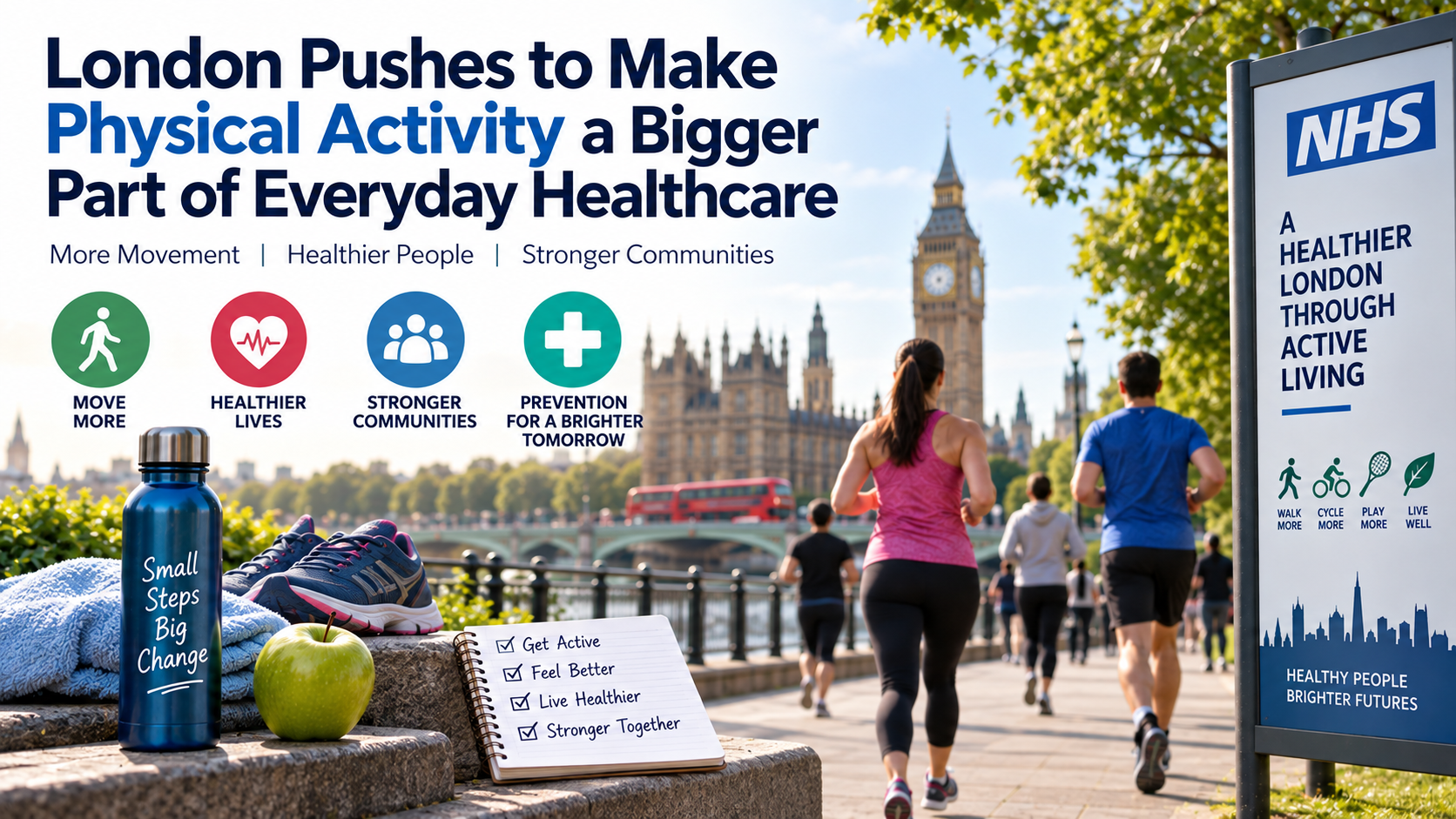
Physical activity has traditionally been something doctors encourage alongside medical care. But across London, there is growing interest in making movement a more meaningful part of conversations about prevention, recovery, and long-term health.
The idea is straightforward: healthcare should not only respond when people become ill. It can also help people build healthier routines before problems become more serious. From walking and cycling to strength exercises and community activities, everyday movement could play a bigger role in how London approaches public health.
Table of Contents
| Sr# | Headings |
|---|---|
| 1 | Why Physical Activity Is Becoming a Healthcare Issue |
| 2 | Moving Beyond the Traditional Doctor’s Appointment |
| 3 | Why Everyday Movement Matters |
| 4 | Exercise and Preventive Healthcare |
| 5 | Could Doctors Talk More About Physical Activity? |
| 6 | Community Programs Can Bridge the Gap |
| 7 | Walking Could Be One of London’s Simplest Tools |
| 8 | Making Activity Accessible to More People |
| 9 | The Role of Workplaces in Everyday Health |
| 10 | Supporting Older Londoners to Stay Active |
| 11 | Technology Could Encourage Healthier Habits |
| 12 | Why the Environment Matters |
| 13 | Small Changes Can Produce Sustainable Habits |
| 14 | What a More Active Healthcare System Could Mean |
1. Why Physical Activity Is Becoming a Healthcare Issue
Exercise is about much more than appearance or athletic performance.
Regular physical activity is associated with important benefits for cardiovascular health, muscle strength, mobility, and general well-being. That makes inactivity relevant not just to gyms and sports clubs but also to healthcare.
In a large city such as London, this becomes particularly important. Busy schedules, desk-based jobs, commuting, and long periods of sitting can make movement surprisingly easy to neglect.
Making physical activity part of health conversations can help shift attention toward prevention rather than waiting until problems develop.
2. Moving Beyond the Traditional Doctor’s Appointment
Think about a typical medical appointment. The conversation may involve symptoms, medication, tests, and follow-up treatment.
But could movement become a more routine part of that discussion?
Healthcare professionals can potentially help patients understand how appropriate physical activity fits into their overall health. For some people, that might mean walking more. For others, it could involve strengthening exercises, swimming, cycling, or supervised rehabilitation.
The goal is not to replace medical treatment with exercise. It is to recognize that movement can be one piece of a much larger healthcare puzzle.
3. Why Everyday Movement Matters
Many people hear “physical activity” and immediately picture a gym.
That perception can create an unnecessary barrier.
Movement can include walking to the shops, cycling to work, gardening, dancing, climbing stairs, or playing actively with children. These activities may not feel like formal workouts, but they still get the body moving.
Imagine physical activity as a bank account. You do not need to make one enormous deposit. Small deposits made regularly can gradually add up.
That idea makes an active lifestyle feel much more achievable.
4. Exercise and Preventive Healthcare
One reason physical activity attracts attention in healthcare is its potential role in prevention and long-term health management.
Regular movement can support cardiovascular fitness, strength, balance, mobility, and healthy weight management. It can also provide social and emotional benefits when activities involve groups or outdoor spaces.
Prevention does not mean illness can always be avoided. Genetics, age, environment, and many other factors influence health.
However, helping people become more active gives them another practical way to support their overall well-being.
5. Could Doctors Talk More About Physical Activity?
A doctor’s recommendation can carry considerable weight.
When healthcare professionals ask about smoking or alcohol use, patients understand that these behaviors matter to health. Asking about activity levels can send a similar message.
A useful conversation does not have to involve complicated exercise plans. Questions such as “How much do you walk?” or “What activities do you enjoy?” can open the door.
For patients who need additional support, healthcare professionals may also be able to point them toward suitable local services or specialist advice.
6. Community Programs Can Bridge the Gap
Telling someone to “exercise more” is easy. Helping them actually do it is harder.
This is where local communities can become important.
Walking groups, leisure centers, community exercise classes, parks, sports programs, and other local activities can provide practical opportunities for people to move.
Social support matters too. Joining a walking group, for example, can turn exercise from a solitary obligation into a regular social activity.
For healthcare systems interested in encouraging movement, stronger links with community programs could help transform advice into action.
7. Walking Could Be One of London’s Simplest Tools
London already offers something valuable for increasing activity: many everyday journeys can involve walking.
A person might walk part of the way to work, get off public transport earlier, take a lunchtime walk, or choose stairs instead of an elevator when practical.
Walking requires little equipment and can often fit around routines people already have.
That makes it particularly useful for people who dislike gyms or struggle to find time for structured workouts.
Even so, accessibility varies considerably across London, and not everyone can walk comfortably or safely. Physical activity strategies need to reflect different abilities and circumstances.
8. Making Activity Accessible to More People
Advice only works when people have a realistic opportunity to follow it.
Someone working two jobs may have little free time. A person with limited mobility may need adapted exercises. Others may struggle with the cost of facilities or lack safe places nearby to exercise.
A successful approach to physical activity must recognize these differences.
Affordable facilities, inclusive programs, accessible parks, adapted activities, and clear professional guidance can help more people participate.
Instead of asking why someone is not exercising, healthcare providers can also ask: What is making movement difficult for this person?
That question can lead to more useful solutions.
9. The Role of Workplaces in Everyday Health
Healthcare does not exist separately from everyday life.
Many Londoners spend a large portion of their week working, often at desks or screens. Employers therefore have an opportunity to make movement easier.
Walking meetings, regular movement breaks, cycle facilities, standing options, and active lunch periods are relatively simple examples.
The objective is not to turn offices into gyms. It is to reduce the idea that sitting continuously for hours is the only way to work productively.
Even a few minutes of movement can break up long sedentary periods.
10. Supporting Older Londoners to Stay Active
Physical activity can become especially valuable as people age.
For older adults, staying active may help maintain strength, balance, mobility, and the ability to perform everyday tasks independently.
The appropriate activity will vary from person to person. Walking may suit some, while others may benefit from adapted strength or balance exercises.
Healthcare professionals can play an important role in helping older patients understand what forms of movement may be appropriate, particularly when existing health conditions or mobility limitations are involved.
11. Technology Could Encourage Healthier Habits
Phones and wearable devices have made it easier to see how much, or how little, we move.
Step counters, activity reminders, exercise apps, and digital health programs can provide useful motivation for some people.
But technology should remain a tool rather than becoming another source of pressure.
You do not need to hit a perfect number every day for movement to matter. Progress might simply mean walking more this month than last month or becoming less tired while completing normal activities.
12. Why the Environment Matters
It is difficult to encourage people to move more if the places around them make activity inconvenient.
Safe pavements, parks, cycling infrastructure, accessible public spaces, and well-connected neighborhoods can influence everyday behavior.
If walking feels pleasant and practical, people may do more of it without consciously thinking about “exercise.”
Urban design can therefore become part of the public-health conversation.
In a city as large and varied as London, creating environments that support movement could complement advice delivered through healthcare services.
13. Small Changes Can Produce Sustainable Habits
The biggest mistake people often make is trying to change everything immediately.
Someone who has been inactive might suddenly plan five workouts a week, completely change their diet, and set an ambitious daily step target.
Within weeks, motivation can disappear.
A more manageable approach is to start small and build gradually. Add a short walk after lunch. Use stairs when practical. Try a beginner strength routine. Join a weekly community activity.
Once something feels normal, another habit can be added.
Sustainable health is usually built through repetition rather than dramatic bursts of motivation.
14. What a More Active Healthcare System Could Mean
Making physical activity a bigger part of healthcare does not mean doctors will start acting as personal trainers.
Instead, it could mean asking more questions about movement, recognizing inactivity as an important health factor, directing patients toward appropriate support, and connecting healthcare more closely with community services.
The biggest opportunity may be cultural. Physical activity can stop being viewed solely as something people do to lose weight or look different.
It can instead be treated as an ordinary part of looking after health throughout life.
Conclusion
London’s growing focus on physical activity reflects a broader change in thinking about healthcare. Treating illness remains essential, but supporting people before health problems become more difficult to manage matters too.
From walking and cycling to strength exercises and community programs, everyday movement can become part of everyday healthcare. The approach does not demand that everyone become an athlete. It simply recognizes something surprisingly powerful: sometimes a healthier future begins with finding more reasons to move today.