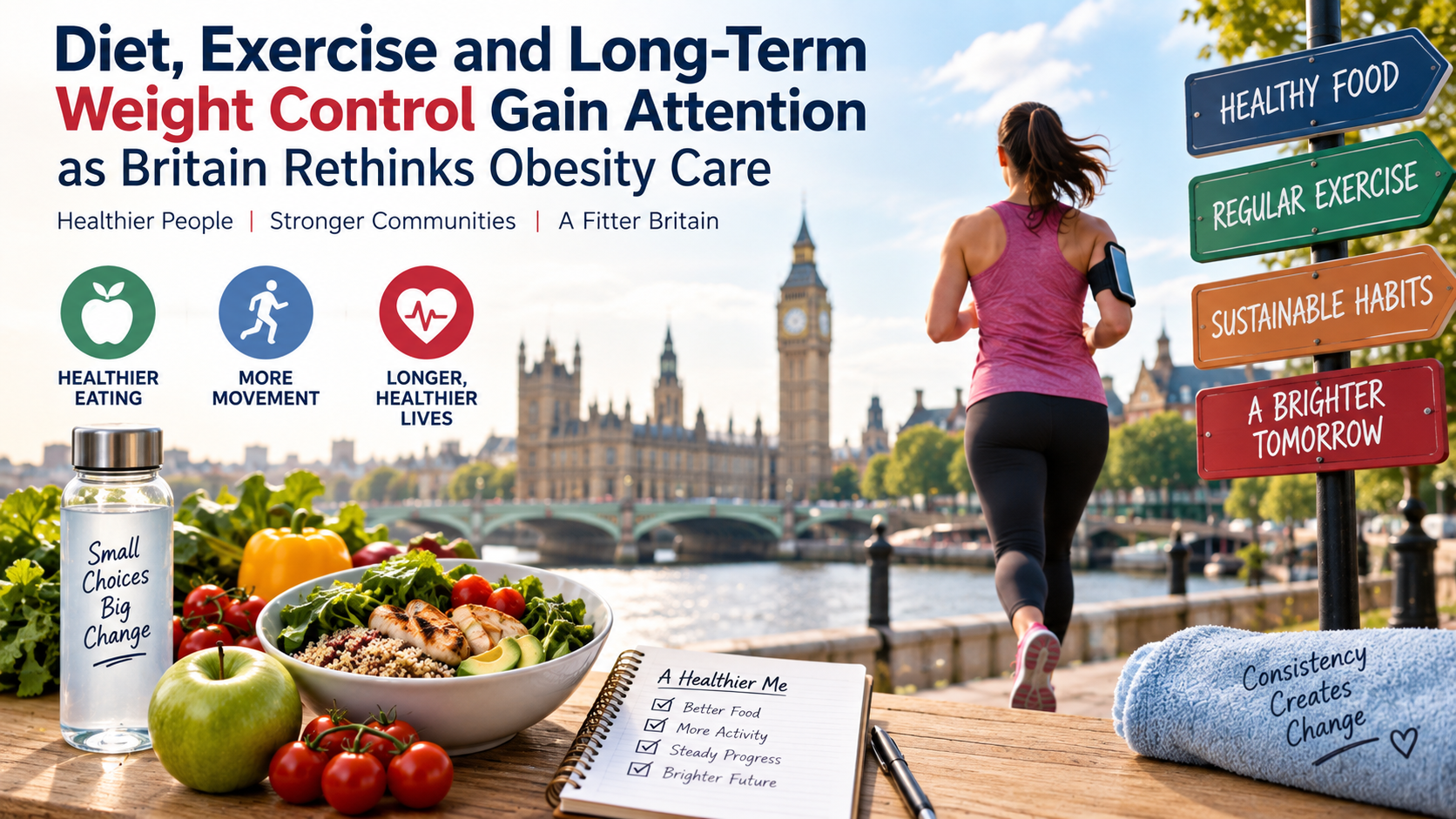
Britain’s conversation about obesity is changing. Instead of treating weight management as a short-term challenge solved by a restrictive diet or a burst of exercise, greater attention is being placed on sustainable habits, medical support, nutrition, and long-term Fitness.
The shift comes as newer obesity treatments have widened the choices available to patients. Yet an important question remains: what happens over the months and years that follow? Increasingly, the answer involves looking beyond the number on the scale and building routines people can realistically maintain.
Table of Contents
| Sr# | Headings |
|---|---|
| 1 | Why Britain Is Rethinking Obesity Care |
| 2 | Weight Management Is More Than Willpower |
| 3 | Why Diet Remains Central to Long-Term Control |
| 4 | Exercise Has Benefits Beyond Weight Loss |
| 5 | The Growing Importance of Strength and Fitness |
| 6 | What Weight-Loss Medicines Change |
| 7 | Why Long-Term Planning Matters |
| 8 | Small Lifestyle Changes Can Have a Bigger Impact |
| 9 | The Challenge of Keeping Weight Off |
| 10 | Sleep, Stress and Everyday Habits Matter Too |
| 11 | Personalized Support Could Become More Important |
| 12 | Moving Away From Shame and Stigma |
| 13 | How People Can Build Sustainable Habits |
| 14 | What the Future of Obesity Care Could Look Like |
1. Why Britain Is Rethinking Obesity Care
Obesity is increasingly being approached as a complex, long-term health issue.
For decades, public advice could sound surprisingly simple: eat less and move more. While food and physical activity clearly matter, that message does not capture the full picture.
Body weight can be influenced by eating patterns, activity levels, genetics, medications, sleep, stress, health conditions, and the environment people live in. Modern obesity care therefore has reason to consider several factors rather than expecting one solution to work for everyone.
This broader approach could change how Fitness, nutrition, and medical treatment work together.
2. Weight Management Is More Than Willpower
Why can one person lose weight relatively easily while another struggles despite making serious changes?
There is no single answer.
Long-term weight control can involve biological, behavioral, social, and environmental influences. Hunger, food availability, working hours, income, mental well-being, sleep, and opportunities for physical activity can all affect daily choices.
Recognizing this complexity does not make healthy habits less important. Instead, it can help healthcare professionals and individuals develop more realistic strategies.
3. Why Diet Remains Central to Long-Term Control
New treatments may attract headlines, but everyday nutrition remains a major part of weight management.
A sustainable diet does not necessarily mean following extreme restrictions. For many people, a more practical approach involves emphasizing vegetables, fruit, whole grains, protein-rich foods, and appropriate portions, while limiting foods high in calories, added sugar, or saturated fat.
The word “sustainable” matters.
A diet that produces quick results but feels impossible to maintain may not be helpful over the long term. Eating habits need to fit around work, family, culture, budget, and personal preferences.
4. Exercise Has Benefits Beyond Weight Loss
Exercise is often judged by a single question: How many calories did I burn?
That overlooks much of its value.
Regular physical activity can support cardiovascular health, mobility, muscle function, and overall well-being. It can also help people improve their physical capacity even when dramatic changes on the scale do not occur.
This is why Fitness should not be measured only through weight loss. Walking farther without becoming tired, feeling stronger, or finding daily activities easier can all represent meaningful progress.
5. The Growing Importance of Strength and Fitness
When people lose weight, the goal is generally not simply to make the body lighter. Maintaining muscle and physical function matters too.
That makes strength-focused exercise an important part of the conversation.
Resistance training can include weights, resistance bands, machines, or bodyweight movements. Combined with other forms of activity, it can support a broader Fitness routine.
Think of your body like a house undergoing renovation. Removing unnecessary material is only one part of the job. You also want to protect the structure that keeps everything functioning.
6. What Weight-Loss Medicines Change
The arrival and growing use of newer weight-management medicines has changed the obesity debate in Britain and elsewhere.
Some treatments can help eligible patients manage appetite and lose significant amounts of weight when prescribed appropriately. However, medication does not automatically remove the need to think about nutrition, movement, muscle health, and long-term behavior.
Medicines are medical treatments, not substitutes for every other part of health.
They may work best as one component of a broader plan developed with appropriate healthcare support.
7. Why Long-Term Planning Matters
Losing weight is one challenge. Maintaining the change can be another.
People may find that old eating patterns return, activity levels decline, or appetite changes over time. This is why obesity care increasingly needs to consider what happens after the initial weight-loss phase.
A long-term plan might involve regular physical activity, practical nutrition strategies, ongoing monitoring, behavioral support, and medical follow-up where appropriate.
The goal becomes maintaining health rather than simply reaching a target number.
8. Small Lifestyle Changes Can Have a Bigger Impact
People often begin a health journey by changing everything at once.
They eliminate favorite foods, start exercising every day, create strict schedules, and promise themselves they will never slip.
Then real life arrives.
A more sustainable approach can involve smaller changes. Walking regularly, preparing more meals at home, reducing sugary drinks, improving portion awareness, or adding two strength sessions per week may feel less dramatic but can be easier to maintain.
Consistency often matters more than perfection.
9. The Challenge of Keeping Weight Off
Weight regain can happen after weight loss, and it should not automatically be viewed as personal failure.
The body can respond to weight loss in ways that affect hunger and energy use. At the same time, environmental pressures remain. High-calorie food is widely available, sedentary routines are common, and stressful schedules can make healthy choices harder.
Maintaining Fitness and structured eating habits therefore requires continued attention.
Instead of thinking of weight management as a temporary project, it may be more useful to treat it like maintaining your teeth: regular care works better than occasional extreme effort.
10. Sleep, Stress and Everyday Habits Matter Too
Diet and exercise attract most of the attention, but everyday routines can influence health behaviors.
Poor sleep can leave people tired and make exercise less appealing. Stress may influence eating patterns. Long working hours can reduce opportunities to cook or exercise.
This means a realistic weight-management strategy may also involve examining sleep routines, stress management, screen time, alcohol intake, and sedentary behavior.
Health rarely exists in separate boxes. One habit can influence another.
11. Personalized Support Could Become More Important
Not everyone starts from the same place.
Someone with limited mobility may need a different Fitness plan from a highly active person. A shift worker may require different meal strategies from someone working regular daytime hours.
That is why personalized care can be valuable.
Rather than handing everyone the same diet sheet, healthcare professionals can consider individual circumstances, medical needs, preferences, and barriers.
The best plan is not necessarily the most impressive one. It is the one a person can safely follow over time.
12. Moving Away From Shame and Stigma
Obesity has long carried considerable social stigma.
People living with obesity can face assumptions about laziness, discipline, or motivation. Such judgments ignore the complicated factors that influence body weight and can make people reluctant to seek support.
A modern approach to obesity care should focus on health, dignity, evidence, and practical assistance rather than blame.
This also changes the meaning of Fitness. Exercise does not need to be punishment for eating. Movement can instead become a positive way to build strength, mobility, confidence, and health.
13. How People Can Build Sustainable Habits
Long-term change often begins with realistic goals.
Instead of promising to exercise every day, you might begin with several walks each week. Instead of banning entire food groups, you could focus on improving the overall quality of your meals.
Useful habits can include:
- Planning balanced meals ahead of time
- Walking more during everyday journeys
- Including regular strength activities
- Reducing long periods of sitting
- Getting enough sleep
- Tracking progress without obsessing over daily changes
- Seeking professional support when needed
Most importantly, allow room for normal life. One meal or missed workout does not erase weeks of progress.
14. What the Future of Obesity Care Could Look Like
Britain’s evolving obesity debate suggests that future care may become increasingly integrated. Medication, nutrition, behavioral support, physical activity, and Fitness could be viewed as complementary tools rather than competing solutions.
The challenge will be ensuring that effective support is accessible and that people receive appropriate guidance before, during, and after weight loss.
Conclusion
Obesity care is moving beyond the idea that one diet, workout program, or medical treatment can solve a complicated long-term problem.
For many people, lasting progress may depend on combining healthy eating, regular Fitness, appropriate medical care, strength, sleep, and sustainable daily routines. Quick solutions will continue to attract attention, but long-term health is usually built differently: through manageable choices repeated often enough to become part of everyday life.