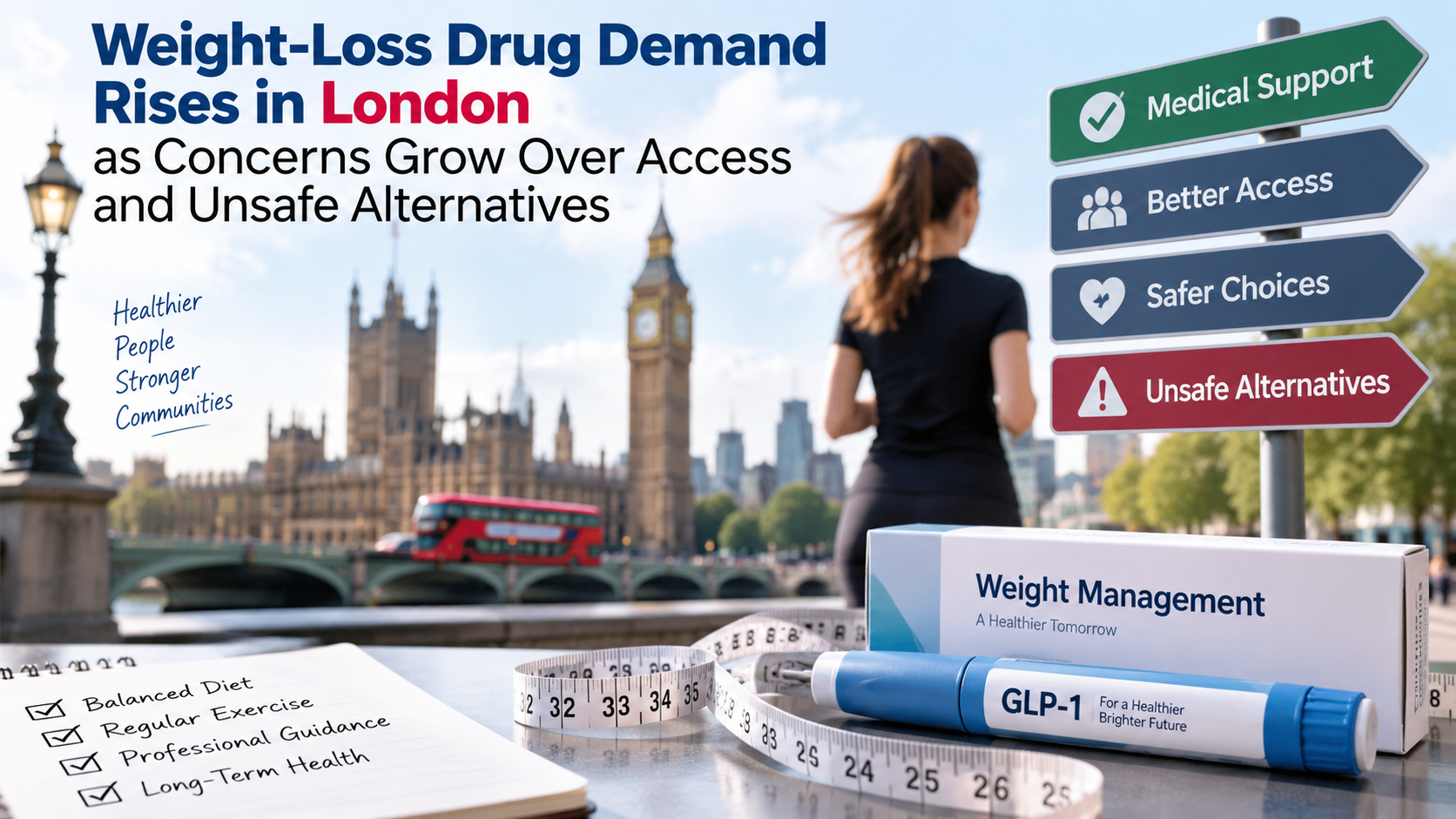
Weight-loss medicines have rapidly changed the conversation around obesity in London and across the UK. Treatments that were once mainly discussed in medical settings have become part of everyday conversations, social media feeds, and online searches.
But rising interest brings a new challenge. As more people seek medication, questions are growing around safe access, medical supervision, affordability, eligibility, and unregulated alternatives. For Londoners considering these treatments, understanding the difference between legitimate healthcare and potentially unsafe shortcuts is becoming increasingly important.
Table of Contents
| Sr# | Headings |
|---|---|
| 1 | Why Demand for Weight-Loss Drugs Is Growing |
| 2 | How Weight-Loss Medicines Have Changed the Debate |
| 3 | Access Is Becoming a Major Issue |
| 4 | Why Medical Assessment Matters |
| 5 | The Risk of Unsafe Online Alternatives |
| 6 | Social Media Is Driving Interest |
| 7 | Weight-Loss Drugs Are Not a Quick Fix |
| 8 | Diet Still Matters During Treatment |
| 9 | Why Physical Activity Should Not Be Forgotten |
| 10 | What Happens After Weight Loss? |
| 11 | Cost Could Create a Two-Tier Experience |
| 12 | Avoiding Counterfeit and Unregulated Products |
| 13 | Building a Safer Long-Term Approach |
| 14 | What Rising Demand Means for London |
1. Why Demand for Weight-Loss Drugs Is Growing
Weight management has entered a new era.
For years, people trying to lose weight were largely directed toward changes in food intake and physical activity. Those remain important, but newer prescription medicines have expanded the options available to some people living with obesity or weight-related health problems.
Public awareness has grown quickly, helped by news coverage, celebrity discussions, advertising, and social media.
For someone who has repeatedly struggled to manage their weight, medication can understandably seem appealing. But growing popularity does not mean these medicines are appropriate for everyone.
2. How Weight-Loss Medicines Have Changed the Debate
Modern weight-loss medicines have challenged the old idea that obesity is simply about motivation.
Some treatments work partly by affecting appetite and feelings of fullness, potentially helping eligible patients eat less and lose weight when used appropriately.
That has encouraged a wider discussion about obesity as a complex health condition influenced by biological, behavioral, environmental, and social factors.
It also changes the question from “Why can’t people just lose weight?” to something more useful: What combination of support might help someone manage their health over the long term?
3. Access Is Becoming a Major Issue
Growing demand does not automatically mean everyone who wants medication can receive it.
Prescription weight-management treatments have eligibility requirements, and access through public healthcare can depend on clinical circumstances and available services. Private treatment offers another route for some patients, but affordability becomes an important consideration.
For London, where healthcare demand is already substantial, increased interest could place additional pressure on weight-management services.
The challenge is not simply supplying medication. It is making sure treatment reaches appropriate patients safely and responsibly.
4. Why Medical Assessment Matters
Weight-loss medication should not be treated like an ordinary product picked from a supermarket shelf.
A healthcare professional needs to consider whether a treatment is appropriate for an individual. Medical history, existing conditions, other medications, possible side effects, and treatment goals may all be relevant.
Patients also need clear information about how a medicine should be used.
Think of prescription treatment like taking a journey with a map. The medicine may help move you forward, but professional guidance helps make sure you are traveling in the right direction.
Skipping that guidance can create unnecessary risks.
5. The Risk of Unsafe Online Alternatives
Where strong demand exists, questionable sellers often follow.
Consumers searching online may encounter websites or social media accounts claiming to sell weight-loss injections or similar products quickly and with minimal checks.
That convenience can be dangerous.
Products obtained outside legitimate medical and pharmacy channels may be counterfeit, incorrectly stored, incorrectly labeled, or contain unexpected ingredients.
An attractive website does not automatically mean a seller is legitimate.
People should be particularly cautious when prescription medicines are offered without proper medical assessment or when sellers make dramatic promises about rapid results.
6. Social Media Is Driving Interest
Scroll through social media and you may see dramatic before-and-after photographs, personal weight-loss stories, or discussions about particular medicines.
These posts can make treatment appear remarkably simple.
But social media rarely shows the complete medical picture.
Someone sharing impressive results may not discuss side effects, eligibility, nutrition, muscle loss, ongoing medical monitoring, or what happens if treatment changes.
Another person’s experience is not a personalized medical recommendation.
People considering prescription treatment should rely on qualified healthcare professionals rather than influencers or anonymous online accounts.
7. Weight-Loss Drugs Are Not a Quick Fix
One injection cannot erase every factor contributing to weight gain.
Even when medication produces significant results, long-term weight management remains complicated.
Eating patterns, activity levels, sleep, stress, medical conditions, and everyday routines can still matter. Treatment may therefore work best when viewed as one part of a broader health strategy.
This distinction is important because unrealistic expectations can lead people toward unsafe alternatives when legitimate treatment does not produce instant results.
Healthy weight management is usually a process rather than an overnight transformation.
8. Diet Still Matters During Treatment
Reduced appetite does not automatically guarantee good nutrition.
People using weight-management medicines still need appropriate nutrients. Meals containing vegetables, fruits, whole grains, protein sources, and other nutritious foods can remain important.
Simply eating dramatically less without thinking about nutritional quality may create new problems.
The goal should not only be to become lighter. Supporting overall health while losing weight matters too.
Individual dietary needs vary, so professional advice can be particularly useful for people undergoing medical weight-management treatment.
9. Why Physical Activity Should Not Be Forgotten
With so much attention surrounding medication, exercise can almost disappear from the conversation.
That would be a mistake.
Physical activity offers benefits that extend well beyond the number displayed on a scale. Walking, cycling, swimming, resistance training, and other activities can support cardiovascular health, strength, mobility, and physical function.
Strength-focused exercise can be particularly relevant when people are losing substantial weight because maintaining muscle matters.
You do not necessarily need an expensive London gym membership. Walking, home exercises, community activities, and active travel can all contribute.
10. What Happens After Weight Loss?
This may be one of the biggest questions surrounding the current weight-loss drug boom.
What happens after someone reaches their goal?
Long-term planning matters because maintaining weight loss can be challenging. Appetite, routines, activity levels, and other factors may change over time.
Patients should understand that obesity management may require ongoing healthcare conversations rather than a short course followed by complete independence.
The maintenance phase deserves just as much attention as the initial weight-loss headlines.
11. Cost Could Create a Two-Tier Experience
London is a city of enormous economic contrasts.
Some residents may be able to pay privately for consultations and prescriptions, while others depend entirely on publicly funded services.
That raises questions about unequal access.
If effective treatments become widely available privately but remain harder to obtain through other routes, income could influence how quickly people receive care.
Fair access will therefore remain an important part of Britain’s wider obesity-treatment debate.
At the same time, expanding access needs to be balanced with clinical need, patient safety, healthcare capacity, and cost.
12. Avoiding Counterfeit and Unregulated Products
Consumers can protect themselves by being skeptical of suspicious offers.
Warning signs may include:
- Prescription medicines offered without appropriate checks
- Products promoted through unsolicited social media messages
- Unrealistic promises of guaranteed or extremely rapid weight loss
- Pressure to pay immediately
- Unclear information about the pharmacy or healthcare provider
- Medicines supplied in questionable or unfamiliar packaging
- Sellers unwilling to provide clear professional credentials
When something involving prescription medicine looks unusually cheap or easy to obtain, caution is sensible.
A bargain is not a bargain if the product puts your health at risk.
13. Building a Safer Long-Term Approach
Successful weight management may require several tools working together.
For eligible patients, medication can potentially be one of those tools. Nutrition, regular movement, strength, sleep, behavioral support, and appropriate medical monitoring may also contribute.
Rather than chasing the fastest possible transformation, people can focus on changes they can safely maintain.
This approach may seem less exciting than dramatic social media promises, but long-term health rarely follows a viral trend.
14. What Rising Demand Means for London
The popularity of weight-loss medicines creates both an opportunity and a challenge for London’s healthcare system.
Effective medical treatments could provide meaningful support to appropriate patients. But growing demand also increases the importance of safe prescribing, reliable information, responsible pharmacies, medical monitoring, and public awareness about counterfeit products.
Healthcare providers may also need to ensure that lifestyle support does not disappear as medication becomes more prominent.
Conclusion
London’s growing demand for weight-loss medicines shows how quickly obesity care is evolving. New treatments may provide valuable options for eligible patients, but popularity should never come at the expense of safety.
Medical supervision, reliable suppliers, good nutrition, physical activity, and realistic long-term planning remain important. As interest continues to grow, London faces a larger task than simply meeting demand: ensuring that people seeking help can distinguish responsible treatment from risky shortcuts.