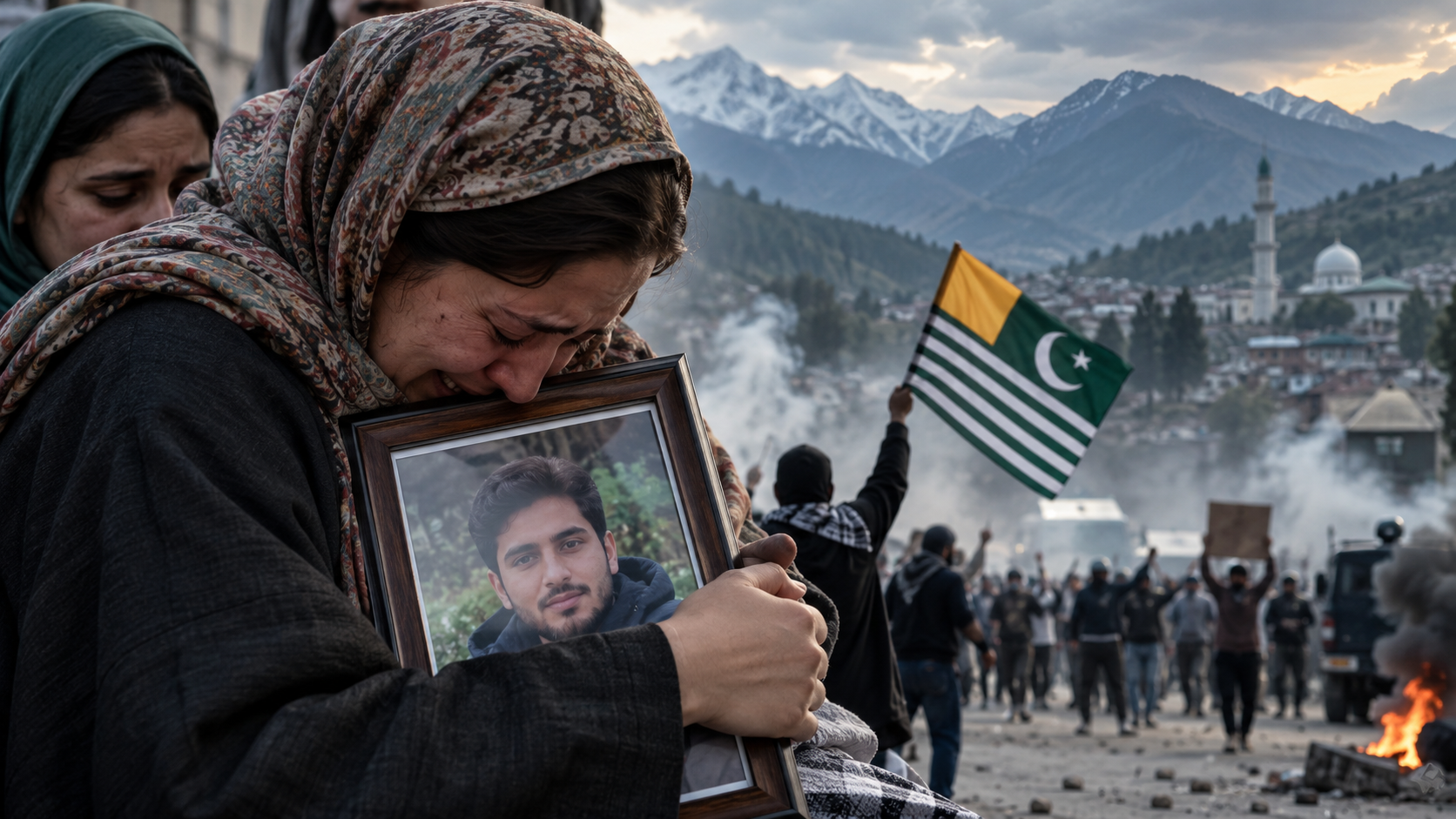
NEW DELHI, October 15, 2026 — A protest over India’s electoral process has escalated into a fresh political confrontation after a court ordered two leaders of the youth-led Cockroach Janta Party (CJP) to spend five days in judicial custody. The decision follows their entry into Delhi’s Jantar Mantar, a historic gathering place that authorities recently removed from the list of officially designated protest sites.
Ashutosh Ranka and Saurav Das were detained after entering the grounds with other activists and raising slogans demanding the resignation of Chief Election Commissioner Gyanesh Kumar. Their detention comes amid mounting opposition to changes in India’s voter lists, which critics say could undermine electoral fairness.
The arrests have put a spotlight on a difficult question for the world’s largest democracy: how should authorities maintain public order without deepening concerns about the right to protest?
Why Were the Two CJP Leaders Sent to Jail?
According to Reuters, Ranka and Das were among roughly a dozen activists who crossed barricades to enter Jantar Mantar on Tuesday. They were subsequently detained and ordered to remain in jail for five days.
Their lawyer, Abhisht Hela, said the authorities cited alleged violations of the conditions under which the leaders had been released following earlier detentions over the weekend.
Police reportedly argued that the leaders could repeat their actions and disturb public order. The CJP, however, has rejected the idea that the detention will force the movement to retreat.
Ajinkya Shinde, another CJP leader who was released on a personal bond, said the movement would not be intimidated by the arrests.
The immediate dispute concerns access to a restricted protest location. The broader conflict, however, revolves around whether the authorities’ restrictions are being applied in a way that leaves sufficient room for peaceful political dissent.
Jantar Mantar Becomes the Centre of a Larger Fight
Jantar Mantar has long been associated with public demonstrations in New Delhi, serving as a prominent location for citizens and campaigners seeking to bring their grievances to the attention of political leaders.
Delhi Police recently announced that the site was no longer an officially designated venue for protests and identified three alternative locations.
The change came as the CJP and opposition groups intensified their campaign against the Election Commission over voter-list revisions. CJP founder Abhijeet Dipke argued that removing the location’s official protest status would not extinguish public resistance.
For activists, the issue is about more than a particular stretch of ground in the capital. They fear that restrictions on established protest venues could make it more difficult to organise visible demonstrations and attract public attention.
For authorities, enforcing restrictions on unauthorised gatherings is a matter of public order and compliance with legal requirements.
The clash between those positions has turned Jantar Mantar into a focal point of a much wider argument about political participation.
The Voter-List Controversy Driving the Protests
The protests centre on revisions to India’s electoral rolls that have reportedly removed more than 130 million names from voter lists since the process began last year.
According to figures cited by Reuters, the removals include approximately 28 million names associated with people who had died, 63 million linked to people who had relocated and 30 million people who could not be traced.
The Election Commission has said that voters whose names were wrongly removed can re-enrol. It has denied allegations that the process was designed to benefit any political party.
The ruling Bharatiya Janata Party (BJP), led by Prime Minister Narendra Modi, has also rejected accusations of electoral manipulation, arguing that its critics are undermining confidence in legitimate electoral procedures.
Opposition parties and campaigners remain concerned that the changes could disproportionately affect Muslims and other minority communities, groups they argue may be less likely to support the ruling party.
The allegations have not been established as proof of deliberate electoral manipulation. Nevertheless, the scale of the revisions has made transparency, verification and access to voter registration central issues in the political dispute.
At stake is a fundamental democratic principle: eligible citizens must be able to exercise their voting rights, and electoral procedures must inspire public confidence.
How a Youth Movement Became a Political Force
The Cockroach Janta Party has grown from an unconventional youth movement into a prominent source of opposition to government policies.
Its campaign has addressed issues extending beyond elections, including employment opportunities, government-school infrastructure and examination irregularities. These concerns have helped it connect with young people who feel that established political institutions have not adequately addressed their problems.
Earlier this year, a weeks-long sit-in by the movement’s supporters over examination paper leaks contributed to pressure that culminated in the resignation of Education Minister Dharmendra Pradhan.
That episode gave the movement a significant political victory and demonstrated how sustained youth-led mobilisation can bring national attention to issues that might otherwise remain confined to individual communities.
The current confrontation is potentially more consequential because it touches the electoral system itself.
If the CJP maintains its momentum, the arrests could become a rallying point for supporters who already believe their concerns are not receiving adequate attention. Alternatively, sustained restrictions and legal proceedings could make it more difficult for the movement to organise demonstrations.
Either way, the response to the arrests is likely to influence the movement’s next phase.
Can Arrests Resolve the Dispute?
The five-day custody order may temporarily remove two prominent organisers from the streets, but it does not resolve the questions that brought protesters to Jantar Mantar.
The CJP has pledged to continue its campaign, while opposition groups have maintained pressure over the voter-list revision process.
This leaves the authorities facing two separate challenges. The first is managing demonstrations in accordance with the law. The second is addressing concerns about electoral procedures through credible explanations and accessible remedies for voters who believe their names have been wrongly removed.
These challenges require different responses. Police action may address an alleged breach of restrictions, but it cannot substitute for transparency in electoral administration.
Likewise, campaigners seeking political change must navigate applicable laws and recognise that crossing barricades or violating lawful restrictions can carry legal consequences.
The central issue is whether both public order and democratic freedoms can be protected without allowing one to unnecessarily undermine the other.
What Happens Next?
The immediate focus will remain on the legal proceedings involving Ranka and Das and on whether the CJP can sustain its campaign despite the detention of key figures.
The movement’s future influence will depend partly on its ability to mobilise supporters, broaden public engagement and keep attention on its electoral concerns. The authorities, meanwhile, face continued scrutiny over how they manage protests and explain restrictions on demonstrations.
The Election Commission’s handling of disputed voter registrations will also be important. Clear information about deleted names, transparent review procedures and effective opportunities for eligible voters to re-enrol could help reduce uncertainty.
Without satisfactory answers, the controversy may continue to fuel opposition protests and deepen mistrust between campaigners and public institutions.
Conclusion: A Protest Dispute With National Implications
The detention of two Cockroach Janta Party leaders illustrates how a confrontation over a protest site can become part of a much larger political struggle.
The authorities say the detentions followed alleged violations of legal conditions. The movement sees them as a reason to continue challenging restrictions and demanding accountability over electoral changes.
Neither the arrests nor the closure of a protest venue can settle the underlying debate over voter registration.
Ultimately, the significance of this episode will depend on whether India’s institutions can address electoral concerns transparently while preserving lawful opportunities for peaceful dissent. That balance is essential not only for the current dispute but also for public confidence in the country’s democratic process.