
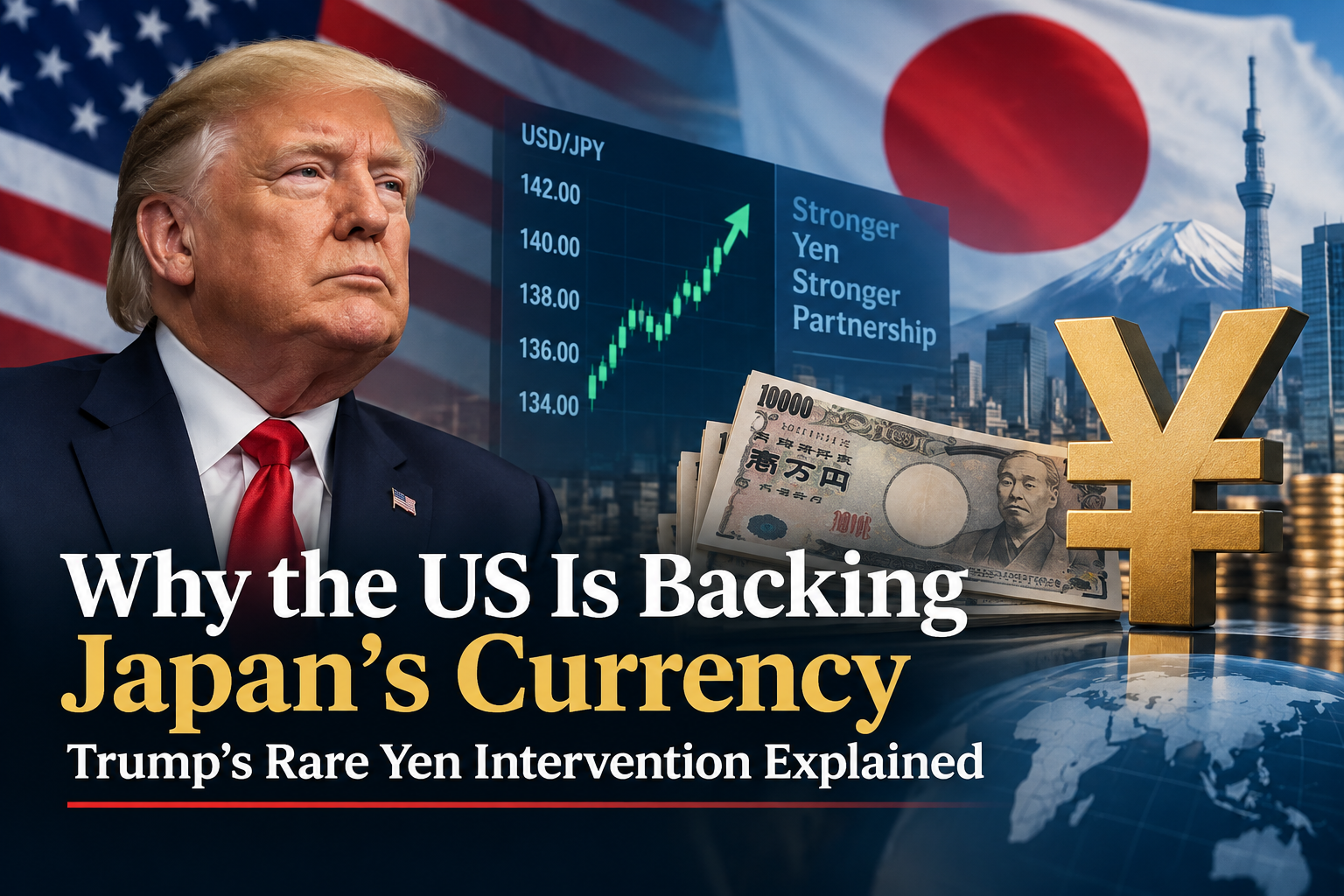
Tokyo: In an unusual move that has drawn the attention of global financial markets, the United States has joined Japan in supporting the Japanese yen, marking the first major coordinated currency intervention between the two allies in more than a decade. The decision reflects growing concerns over Japan’s weakening currency, rising inflation, and the broader impact of financial instability on the global economy.
Why the Yen Has Been Falling
The Japanese yen has declined to its weakest level in nearly 40 years, driven by a combination of economic and global factors.
Japan has maintained relatively low interest rates compared with other major economies, making the yen less attractive to international investors. At the same time, higher energy prices and disruptions to Middle East energy supplies have increased Japan’s import costs, placing additional pressure on households and businesses.
Despite spending tens of billions of dollars to stabilize the currency since 2022, Japanese authorities have struggled to halt its downward slide.
Why Did the Trump Administration Step In?
The coordinated intervention represents a significant shift from the United States’ traditional approach of avoiding direct involvement in foreign currency markets.
President Donald Trump described the move as both a gesture of support for a key ally and a step that would benefit the global economy. Analysts, however, believe broader financial considerations also played a role.
As Japan spent heavily to strengthen the yen, it risked selling large amounts of U.S. Treasury bonds to raise cash. Large-scale sales of Treasuries could push up U.S. borrowing costs and create volatility in global financial markets. By helping stabilize the yen, Washington may also be seeking to reduce pressure on the U.S. bond market.
A Rare Example of Financial Cooperation
Currency interventions involving two major economies are uncommon.
According to Japanese officials, both governments jointly purchased yen in the foreign exchange market to counter what they described as excessive volatility. The operation reportedly helped lift the yen from near ¥164 per U.S. dollar to around ¥155–156, easing immediate market concerns.
Why Japan’s Economy Is Under Pressure
A weak currency creates mixed outcomes for Japan.
While exporters may benefit because Japanese goods become more competitive overseas, consumers and businesses that rely on imported fuel, food, and raw materials face significantly higher costs. Rising import prices have added to inflation, increasing pressure on Prime Minister Sanae Takaichi, whose government is pursuing tax relief and economic stimulus while also managing one of the world’s highest public debt burdens.
What This Means for Global Markets
Japan is the world’s fourth-largest economy, making the value of the yen an important indicator for global investors.
A prolonged decline in the currency could affect international trade, financial markets, and investment flows across Asia and beyond. Coordinated intervention also sends a signal that major economies remain willing to work together when financial instability threatens broader economic confidence.
Beyond Currency Markets
The intervention reflects a broader evolution in U.S.–Japan relations. Economic cooperation is increasingly intertwined with strategic and geopolitical priorities, including supply-chain resilience, regional security, and financial stability.
Rather than viewing currency management as a purely domestic issue, both governments appear to be treating exchange-rate stability as part of a wider effort to reduce global economic uncertainty.
Looking Ahead
Although the joint intervention has temporarily strengthened the yen, economists caution that lasting stability will depend on deeper structural changes. Future decisions by the Bank of Japan on interest rates, Japan’s fiscal policies, energy prices, and investor confidence will all shape the currency’s long-term direction.