
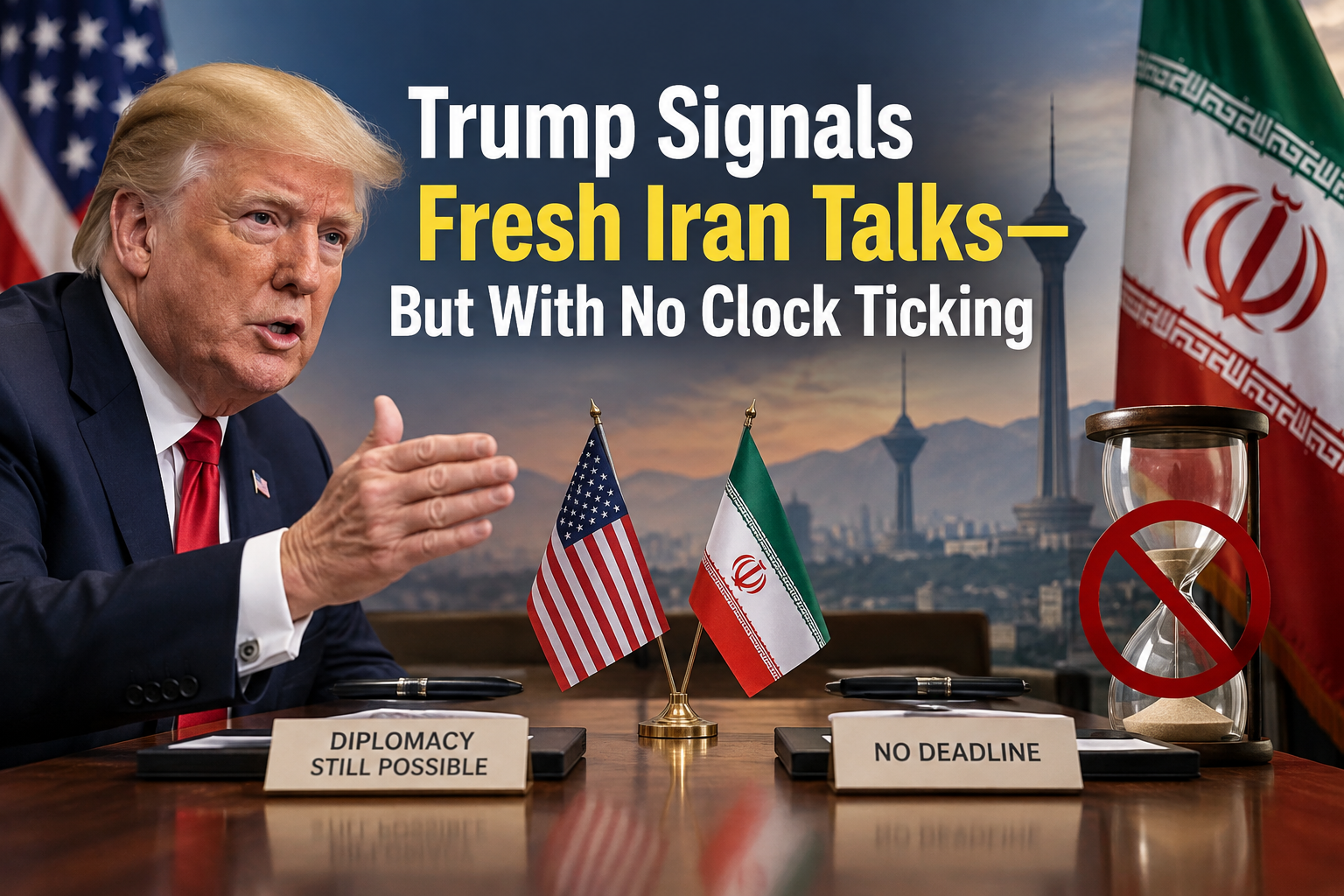
In a move that blends cautious optimism with strategic ambiguity, U.S. President Donald Trump has announced that talks with Iran are set to begin on Monday—yet notably, he has chosen not to impose any deadline for a deal.
The decision reflects a shift in tone at a time when tensions in West Asia have been running dangerously high.
From the Brink of Conflict to the Table
Just days ago, the situation appeared to be heading toward further military escalation. Trump had been weighing fresh strikes against Iran but ultimately stepped back, signaling a preference for diplomacy over confrontation.
Now, with negotiations on the horizon, the message from Washington is clear: dialogue is back on the table—but without pressure from an artificial timeline.
Trump himself summed it up with a wait-and-see attitude, suggesting that progress will depend on how both sides engage rather than how quickly they move.
Why No Deadline Matters
Unlike previous rounds of negotiations—where deadlines often created urgency but also tension—this open-ended approach could be a calculated strategy.
By avoiding a fixed timeline, the U.S. may be giving itself flexibility while also testing Iran’s willingness to engage seriously. At the same time, it reflects the unpredictable nature of a conflict that has repeatedly swung between escalation and diplomacy.
The Real Stakes: Oil, Security, and Nuclear Fears
At the heart of the talks lies more than just political rivalry. The Strait of Hormuz—a narrow but crucial global shipping route—has become a central concern. Disruptions there have affected nearly 20% of global oil and gas flows, sending shockwaves through international markets.
Reopening and securing this passage is likely to be a key priority in any agreement.
Beyond that, the broader issue of Iran’s nuclear ambitions continues to loom large, shaping both U.S. strategy and regional security concerns.
A Complex Diplomatic Web
While Washington prepares for talks, Iran is also actively engaging with regional players. Its foreign minister has been in discussions with countries like Saudi Arabia and Pakistan, while Oman continues to play a mediating role in negotiations linked to maritime access.
However, these parallel diplomatic efforts highlight a deeper reality: progress may depend as much on regional consensus as on direct U.S.-Iran dialogue.
Israel and Regional Pressures
Adding another layer of complexity, Israel has maintained a firm stance against Iran’s military and nuclear activities, warning it could act independently if necessary.
This means that even if U.S.-Iran talks advance, broader regional dynamics could still shape the outcome.
Markets React, But Skepticism Remains
Financial markets responded quickly to the announcement, with oil prices dropping as hopes for de-escalation grew.
Yet analysts remain cautious. The history of U.S.-Iran relations in recent months has been marked by sudden reversals—talks announced, then stalled; strikes threatened, then withdrawn.
The Bigger Picture
Trump’s latest move is less about immediate resolution and more about opening a door—one that has closed and reopened several times during this conflict.
By removing the pressure of a deadline, the U.S. may be aiming for a more sustainable agreement. But it also signals uncertainty: a recognition that this is not a conflict that can be resolved quickly or easily.
For now, all eyes are on Monday. Whether these talks mark the beginning of genuine progress—or just another pause in a cycle of tension—remains to be seen.