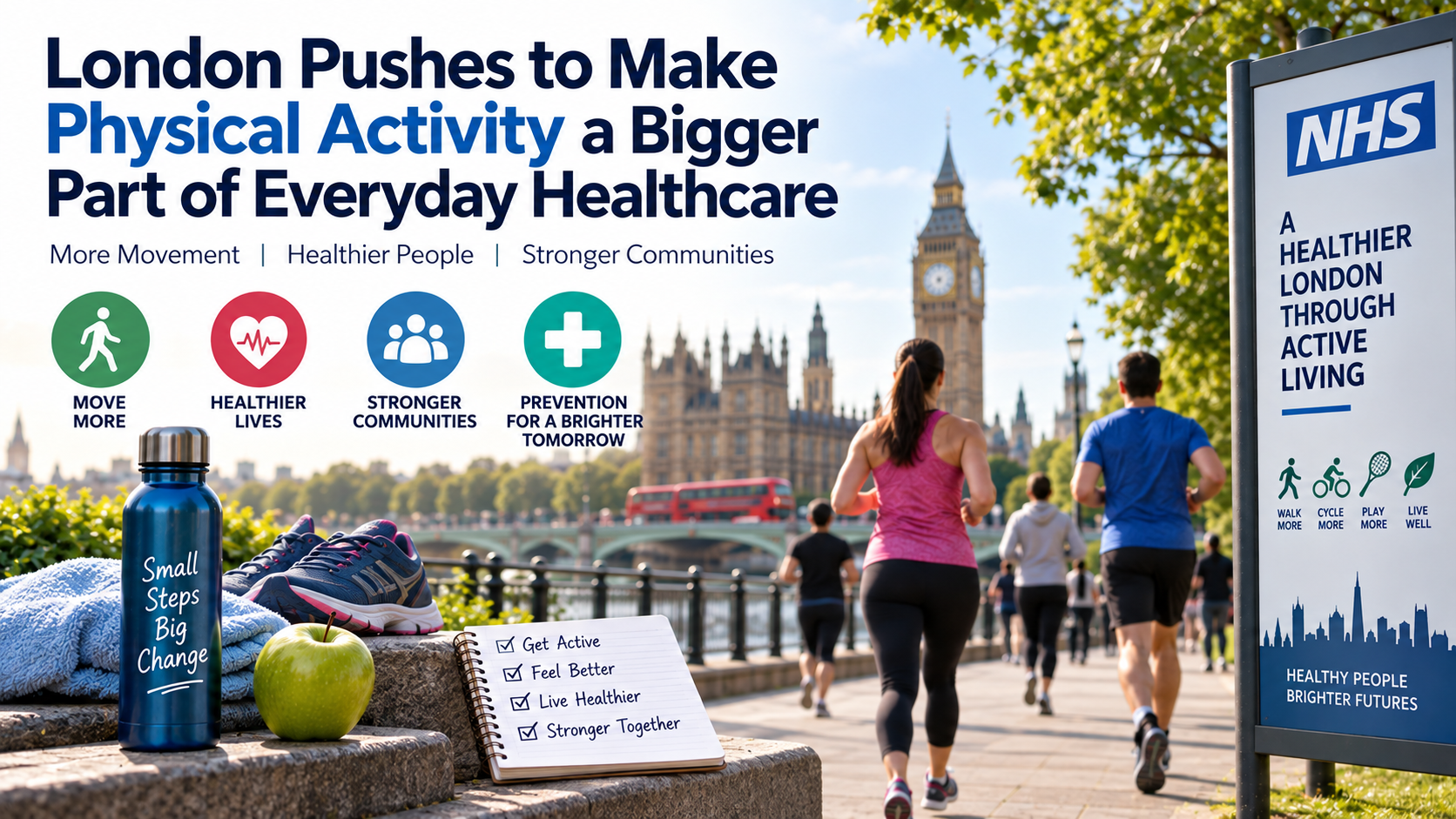
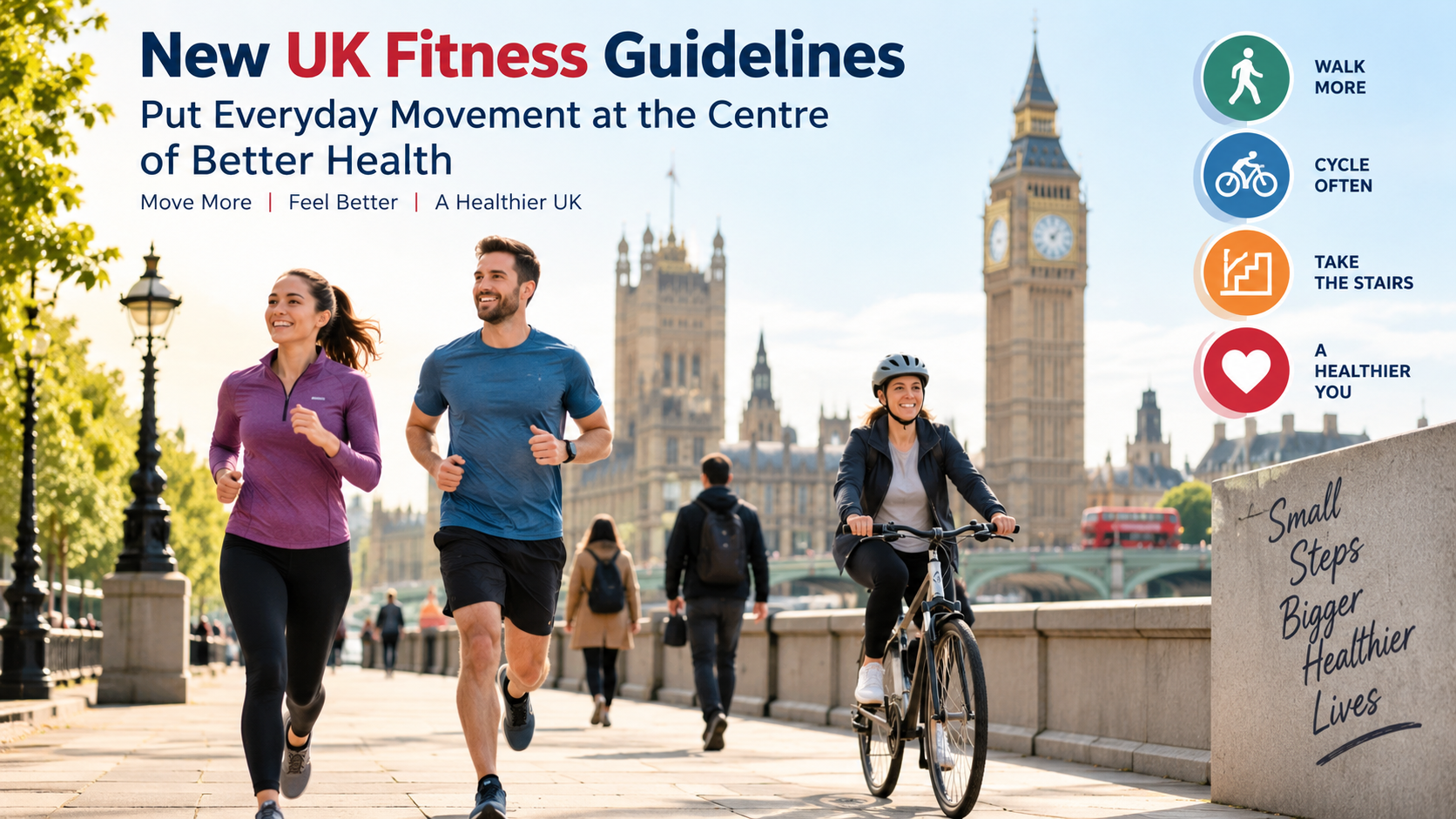
For years, getting fit has often been associated with gym memberships, intense workouts, running plans, and strict exercise schedules. But the broader public-health message in the UK is increasingly simple: movement throughout everyday life matters.
That means walking to the shops, taking the stairs, gardening, cycling, playing with your children, or simply getting up from your desk more often can contribute to better health. The message makes Fitness feel less like a separate activity and more like something that can become part of normal life.
Table of Contents
| Sr# | Headings |
|---|---|
| 1 | Why Everyday Movement Matters |
| 2 | Fitness Is Bigger Than Going to the Gym |
| 3 | Why Sitting Less Is Important |
| 4 | How Much Physical Activity Should Adults Aim For? |
| 5 | Walking Can Make a Real Difference |
| 6 | Strength Should Still Be Part of the Picture |
| 7 | Small Bursts of Movement Can Add Up |
| 8 | Making Movement Part of the Working Day |
| 9 | Fitness for Older Adults |
| 10 | Why Children Need Daily Movement |
| 11 | Removing the Pressure Around Exercise |
| 12 | Simple Ways to Become More Active |
| 13 | Building Habits That Last |
| 14 | The Bigger Public Health Picture |
1. Why Everyday Movement Matters
Movement does not have to look like a workout to count.
One of the most useful ideas behind modern physical-activity guidance is that people should look for opportunities to move throughout the day. A brisk walk, household chores, gardening, cycling, or active travel can all increase physical activity.
This approach matters because structured exercise is not practical for everyone. Work schedules, family responsibilities, cost, disability, location, and motivation can all affect how easily someone can follow a traditional workout routine.
Making movement part of daily life can therefore make Fitness more accessible.
2. Fitness Is Bigger Than Going to the Gym
When you hear the word Fitness, what comes to mind? Treadmills? Dumbbells? People wearing sports gear?
Those things can certainly be part of it, but they are not the whole story.
Physical fitness can also be supported through ordinary activities that get your body moving. Walking the dog, carrying groceries, cleaning the house, dancing, or cycling to work can all contribute.
Think of movement like putting coins into a savings jar. One coin may not seem important, but regular deposits gradually create something valuable. Daily movement can work in much the same way.
3. Why Sitting Less Is Important
Modern life makes prolonged sitting remarkably easy. Many people sit while commuting, working, eating, relaxing, and watching television.
That is why public-health guidance does not focus only on scheduled exercise. It also encourages people to break up long periods of inactivity.
You could stand while making a phone call, walk for a few minutes during lunch, stretch between tasks, or take a short walk after dinner. None of these requires special equipment.
The goal is simple: give your body more opportunities to move.
4. How Much Physical Activity Should Adults Aim For?
UK physical-activity recommendations have generally advised adults to aim for around 150 minutes of moderate-intensity activity each week, or about 75 minutes of vigorous activity, alongside muscle-strengthening activities.
Moderate activity can include brisk walking, cycling, or other movement that raises your heart rate and makes you breathe faster while still allowing you to talk.
But the numbers should not discourage beginners.
Doing some activity is better than doing none. Someone who currently moves very little can start gradually rather than trying to transform their routine overnight.
5. Walking Can Make a Real Difference
Walking may be one of the most underrated forms of Fitness.
It is familiar, usually requires no special training, and can often be fitted around activities people already need to do.
Instead of automatically driving a short distance, you might walk. You could get off public transport one stop earlier or take a brisk walk during your lunch break.
The advantage of walking is its simplicity. There is no complicated program to learn, and progress can be gradual.
6. Strength Should Still Be Part of the Picture
Everyday movement is important, but cardiovascular activity is not the only consideration.
Muscle-strengthening activity also plays an important role in overall physical health. UK guidance recommends adults include activities that work major muscle groups on at least two days each week.
That does not necessarily mean lifting heavy weights at a gym. Bodyweight exercises, resistance bands, carrying heavy shopping, some forms of yoga, and other resistance-based activities can challenge muscles.
Maintaining strength becomes particularly important as people get older.
7. Small Bursts of Movement Can Add Up
One reason people avoid exercise is the belief that they need a large block of free time.
But what if you only have ten minutes?
Use them.
A short walk before work, another during lunch, and some active household chores later can turn an otherwise inactive day into a much more mobile one.
Consistency can matter more than creating the perfect workout schedule.
This is where everyday Fitness becomes practical. Instead of waiting for the ideal hour to exercise, people can look for smaller opportunities that already exist.
8. Making Movement Part of the Working Day
Office and home-based work can involve hours in front of a screen.
Creating movement breaks can help interrupt that pattern. Workers might walk while making certain calls, use stairs instead of lifts, take active lunch breaks, or simply stand and move regularly.
Employers can also encourage healthier routines by making active breaks easier and supporting walking or cycling where practical.
Movement does not always need to compete with work. Sometimes it can fit around it.
9. Fitness for Older Adults
Staying active can become increasingly valuable with age.
For older adults, Fitness is not necessarily about running faster or lifting heavier weights. Maintaining strength, balance, mobility, and independence may be more meaningful goals.
Walking, gardening, strength exercises, dancing, and balance-focused activities can all have a place in an active lifestyle.
For people who are frail, have health conditions, or have been inactive for a long time, activities may need to be adapted to individual ability and professional medical advice.
10. Why Children Need Daily Movement
Children and young people also benefit from making activity part of everyday life.
Running, cycling, playground games, sports, dancing, and active travel can all contribute. Importantly, movement should not always feel like formal exercise.
Making activity enjoyable can help children develop a healthier relationship with movement.
When physical activity becomes normal rather than a punishment or obligation, healthy habits may be easier to carry into adulthood.
11. Removing the Pressure Around Exercise
The fitness industry can sometimes make exercise look intimidating. Social media adds another layer, with carefully edited workout videos and dramatic transformation stories.
Public-health advice can offer a more realistic message.
You do not need expensive clothes, advanced equipment, or an athletic body to become more active.
Start from where you are, not where someone else is.
That mindset can make Fitness feel achievable rather than overwhelming.
12. Simple Ways to Become More Active
You do not necessarily need to redesign your entire lifestyle. Small changes can create more opportunities for movement.
Practical options include:
- Walking short journeys instead of driving
- Taking stairs when practical
- Going for a walk during lunch
- Standing and moving during regular breaks
- Doing active household chores
- Gardening
- Cycling for transport or recreation
- Playing active games with children
- Adding simple strength exercises at home
Choose activities that fit your circumstances. A routine you can maintain is usually more useful than an ambitious plan you quickly abandon.
13. Building Habits That Last
Starting is often easier than continuing.
The key is to make movement convenient. If you enjoy walking, schedule it around something you already do. If you dislike gyms, do not assume you need one. If dancing keeps you moving, dance.
You can also set realistic targets and gradually increase activity as your confidence and Fitness improve.
Healthy habits are rarely built through one dramatic decision. They usually grow from repeated small choices.
14. The Bigger Public Health Picture
Encouraging everyday movement is about more than individual workout routines. It also raises questions about how communities are designed.
Safe walking routes, cycling infrastructure, accessible parks, public spaces, schools, workplaces, and transport systems can influence how easy it is for people to stay active.
That means improving population Fitness is not simply about telling individuals to exercise more. Creating environments where movement is convenient, safe, and accessible can be equally important.
Conclusion
The changing conversation around physical activity offers a refreshingly practical idea: better Fitness does not have to begin inside a gym.
Walking more, sitting less, building strength, taking active breaks, and finding enjoyable ways to move can all become part of a healthier routine. Instead of treating exercise as another demanding task on your schedule, everyday movement allows physical activity to become part of the schedule itself.
And sometimes, the most sustainable health changes begin with something as simple as getting up and moving.