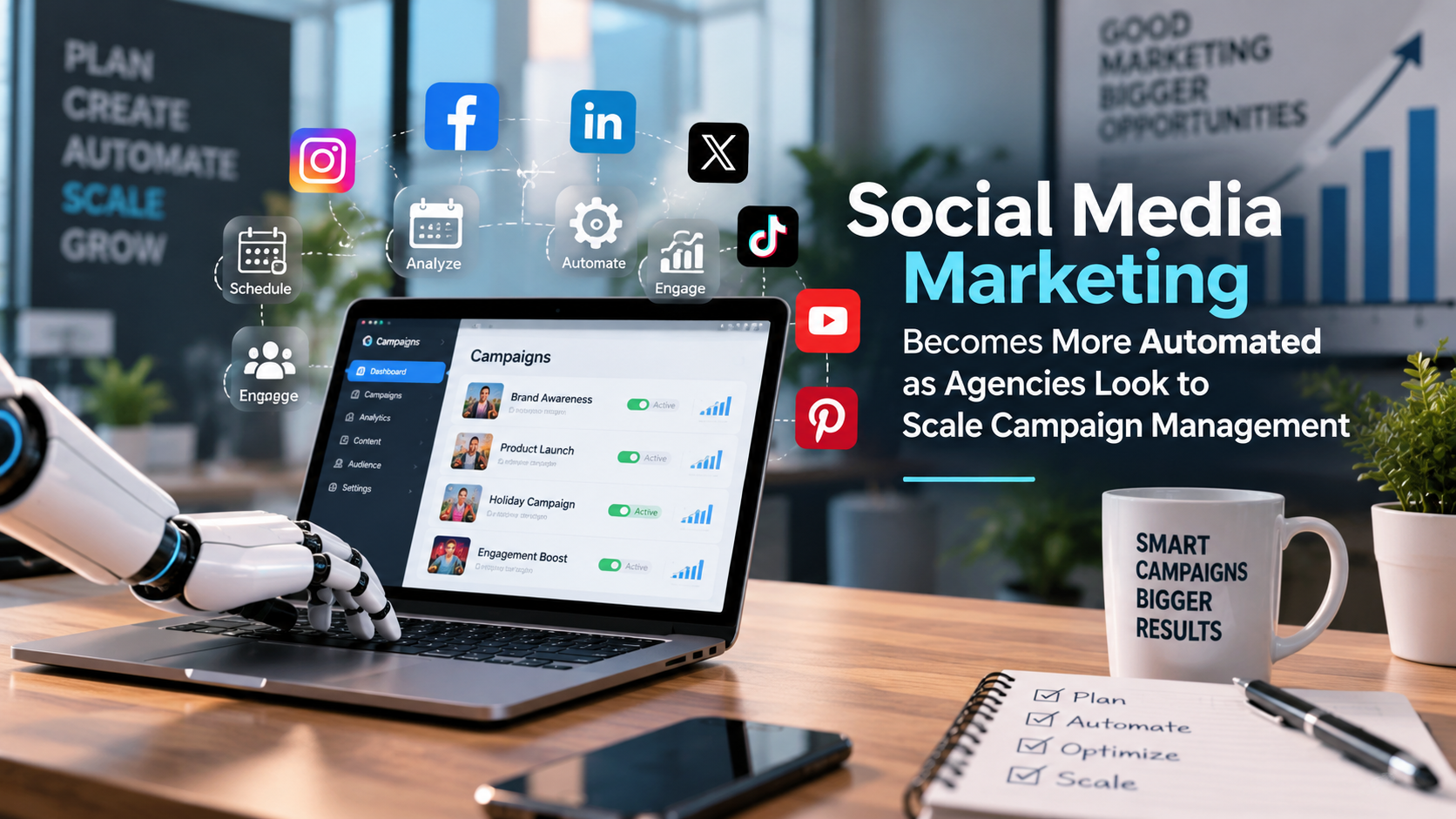
Social media marketing is changing fast. Agencies once spent hours creating posts, checking performance, replying to comments, and adjusting campaigns manually. Today, automation is taking over many of these routine tasks. As client lists grow, agencies need smarter ways to manage multiple accounts without sacrificing quality. Tools such as an SMM Panel can help organize publishing, engagement, reporting, and other campaign activities from a more centralized workspace. But does automation really make social media marketing better? In many cases, it can—when technology supports strategy instead of replacing it.
Table of Contents
| Sr# | Headings |
|---|---|
| 1 | Why Social Media Agencies Are Turning to Automation |
| 2 | The Growing Role of an SMM Panel |
| 3 | Managing Multiple Client Accounts |
| 4 | Automated Content Scheduling |
| 5 | Faster Campaign Monitoring |
| 6 | Using Data to Improve Decisions |
| 7 | Automation Saves Valuable Time |
| 8 | Why Human Creativity Still Matters |
| 9 | Risks of Over-Automating Social Media |
| 10 | Security and Account Management |
| 11 | How Agencies Can Build a Balanced Strategy |
| 12 | The Future of Automated Social Media Marketing |
1. Why Social Media Agencies Are Turning to Automation
Running one social media account can already feel like a full-time job. Now imagine managing dozens of accounts for different clients, each with its own audience, tone, schedule, and goals.
That is where automation becomes useful.
Agencies are using technology to handle repetitive work such as scheduling content, organizing campaigns, tracking metrics, and creating reports. Instead of spending an afternoon on tasks that follow the same pattern every week, a team can focus on planning and creative work.
The goal is not to remove people from social media marketing. The goal is to give people more time to do the work machines cannot do well.
2. The Growing Role of an SMM Panel
An SMM Panel can act like a central control room for social media activities. Rather than jumping between multiple dashboards and tools, marketers can use a single platform to organize various campaign tasks.
For agencies, this can be especially helpful when several clients are involved.
A well-designed SMM Panel may help teams keep campaigns organized, monitor activity, manage services, and review performance more efficiently. The exact features vary between platforms, so agencies should evaluate tools carefully before choosing one.
Think of it like having a well-organized desk. Everything you need is within reach, making it easier to work quickly without constantly searching for the right tool.
3. Managing Multiple Client Accounts
Scaling an agency creates a simple problem: more clients mean more tasks.
Every client may require different posting schedules, campaign objectives, audiences, and reporting requirements. Managing these details manually can create unnecessary pressure for employees.
Automation can help agencies create repeatable workflows. Teams can organize campaigns, assign tasks, schedule updates, and monitor account activity without treating every project as a completely new process.
This consistency also reduces the chance of small mistakes, such as forgetting a scheduled post or overlooking an important performance metric.
4. Automated Content Scheduling
Social media never really sleeps. Audiences are active at different times, and businesses often need to publish content consistently throughout the week.
Automated scheduling allows marketers to prepare content in advance. Instead of logging into an account every morning to publish a post, the team can build a content calendar and let approved posts go live according to the planned schedule.
Consistency is one of the biggest advantages of automation.
However, scheduling should not mean setting everything and forgetting about it. Current events, cultural moments, customer reactions, and unexpected news can quickly change what is appropriate to publish.
5. Faster Campaign Monitoring
Imagine driving a car while checking the road only once every few hours. You would miss important changes.
Social media campaigns work in a similar way. Performance can change quickly, especially when paid advertising or promotional content is involved.
Automated monitoring can help agencies identify changes in engagement, clicks, reach, or other useful metrics. Teams can then investigate what is happening and make adjustments.
The faster an agency spots a problem, the faster it can respond.
Automation therefore becomes a support system rather than a replacement for marketing judgment.
6. Using Data to Improve Decisions
Good marketing is not based entirely on guesswork.
Agencies want to understand which content attracts attention, which campaigns generate results, and where audiences are most responsive. Automated reporting can collect and organize this information so marketers spend less time building spreadsheets manually.
For example, an agency may discover that short videos perform better than static posts for one client, while educational carousels work better for another.
The important point is to use data as a guide. Numbers can show what happened, but marketers still need to understand why it happened.
7. Automation Saves Valuable Time
Time is one of an agency’s most valuable resources.
If employees spend hours repeating simple administrative tasks, there is less time available for creative thinking, client communication, and campaign strategy.
Automation can reduce that workload.
An SMM Panel and related marketing tools may help teams streamline repetitive processes and create more efficient workflows. This can allow a small agency to serve more clients without immediately needing to expand its workforce.
Scaling becomes less about working longer hours and more about working smarter.
8. Why Human Creativity Still Matters
There is one thing automation cannot easily replicate: genuine human understanding.
A software tool can schedule a post, collect engagement data, or organize a report. It cannot fully understand a brand’s personality, recognize a subtle cultural reference, or create an emotional connection with an audience in the same way an experienced marketer can.
That is why successful agencies are unlikely to choose between humans and automation.
Instead, they will combine the two.
Technology handles repetitive work. People handle creativity, relationships, judgment, and strategy.
This combination can make campaigns both efficient and authentic.
9. Risks of Over-Automating Social Media
Automation has clear benefits, but too much automation can create problems.
Have you ever seen a social media account that posts constantly but feels completely lifeless? That is often what happens when businesses focus on output instead of connection.
Automatically publishing irrelevant content, sending repetitive messages, or relying on artificial engagement can damage a brand’s reputation.
Agencies should also avoid tools or practices that violate platform rules. Short-term numbers are not worth putting a client’s account at risk.
Automation should make marketing more efficient—not make it look robotic.
10. Security and Account Management
As agencies manage more accounts, security becomes increasingly important.
Multiple logins, client information, payment details, and campaign data can create additional risks if they are poorly managed. Agencies should choose reputable tools, use strong passwords, enable available security features, and limit account access to people who actually need it.
Before using an SMM Panel, agencies should also review its policies, security practices, reputation, and compatibility with the social platforms they use.
Convenience should never come at the expense of account security.
11. How Agencies Can Build a Balanced Strategy
The best approach is usually a combination of automation and human oversight.
Agencies can start by identifying repetitive tasks that consume time without requiring much creative judgment. Scheduling, reporting, basic monitoring, and workflow organization are often good candidates.
Next, teams can establish approval processes for important client content.
Finally, marketers should regularly review automated campaigns. A campaign that worked last month may not work today.
Automation should support a flexible workflow, not lock an agency into one routine.
12. The Future of Automated Social Media Marketing
Social media automation is likely to become even more common as agencies handle larger campaigns across more platforms.
Future tools may make reporting faster, campaign management more connected, and audience insights easier to understand. Agencies will continue looking for ways to reduce repetitive work while delivering better results for clients.
Still, the most successful marketers will probably understand an important distinction: automation can improve the process, but people create the message.
As competition grows, agencies that combine efficient technology with strong creative thinking may have an advantage. An SMM Panel can become one piece of that larger system, helping teams organize their operations while leaving marketers free to concentrate on what truly matters.
Conclusion
Social media marketing is becoming more automated because agencies need practical ways to scale without overwhelming their teams. From scheduling and monitoring to reporting and account organization, automation can remove many repetitive tasks from the daily workload. Yet technology should remain a tool rather than the entire strategy. When agencies combine automation with human creativity, careful oversight, and genuine audience understanding, they can build campaigns that are both efficient and engaging.