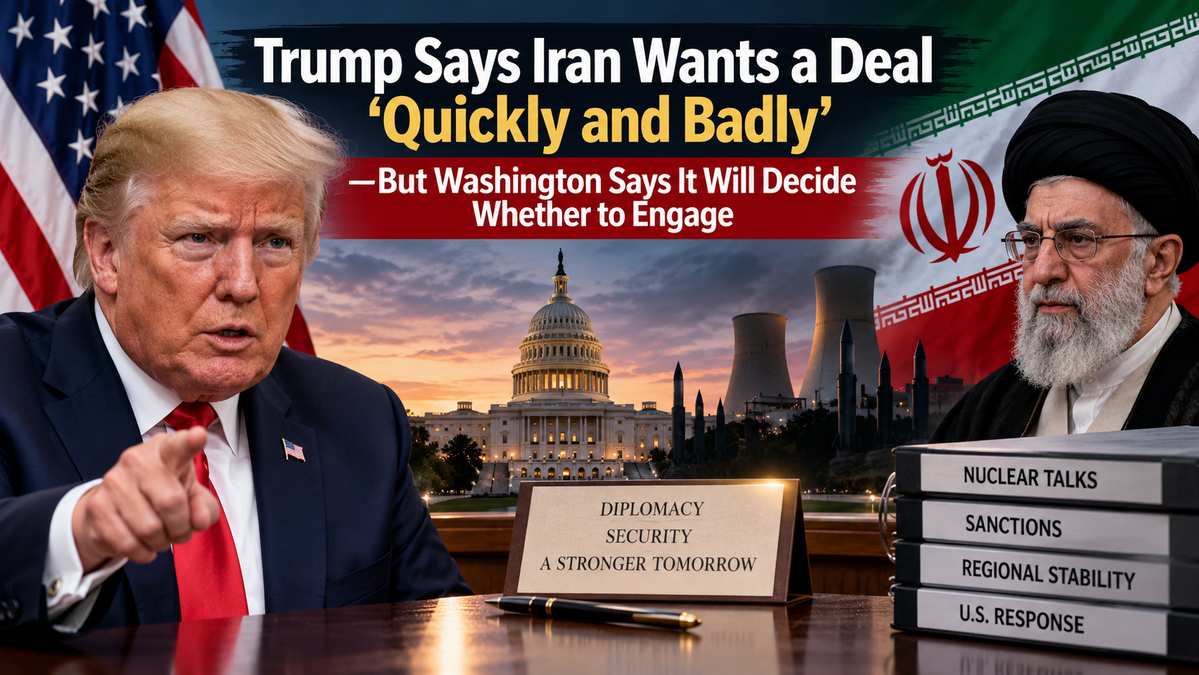
U.S. President Donald Trump has said Iran wants to reach a deal with Washington “quickly and badly,” but he made clear that the next move, in his view, belongs to the United States.
In a post on Truth Social, Trump said he would determine whether the U.S. chooses to engage with Iran, while adding that Washington remains open to the idea of renewed engagement.
The statement immediately raised a larger question: If Iran is ready to negotiate, could diplomacy finally return to the center of a conflict that has repeatedly moved between military escalation and stalled attempts at agreement?
For now, the answer remains uncertain.
Trump’s comments represent his assessment of Iran’s position. Subsequent reporting indicated that Tehran disputed the idea that it was seeking talks under the circumstances described by Trump, highlighting how far apart the two sides may still be on the basic question of whether and how negotiations should begin.
Trump Leaves the Door Open—But Keeps Control of the Decision
Trump’s message contained two important signals.
First, he said Iran wants a deal. Second, he did not announce that negotiations had actually begun.
Instead, Trump said he would decide whether the United States would engage.
That distinction matters.
There is a major difference between saying diplomacy is possible and confirming that formal talks are underway. At this stage, there was no announcement of a new negotiating timetable, venue, mediator or agreed framework for discussions.
In effect, Trump’s statement placed diplomacy on the table without confirming that Washington and Tehran had returned to it.
A Familiar Pattern of Talks, Breakdowns and Renewed Pressure
The latest comments come after months of shifting relations between the United States and Iran.
According to recent reporting, earlier efforts to establish understandings between the two sides stalled amid disagreements that included the Strait of Hormuz. Military action later resumed, further complicating the possibility of a diplomatic breakthrough.
That history makes any suggestion of renewed engagement significant—but also difficult to interpret.
Previous openings have not always developed into lasting negotiations. Public statements from Washington and Tehran have frequently been followed by conflicting accounts about whether talks were taking place and what conditions would be required.
The result is a diplomatic landscape where a single statement can generate optimism without resolving the issues that caused previous efforts to break down.
Iran’s Position Remains a Critical Unknown
The central weakness in the claim that a deal may be near is the lack of publicly confirmed agreement between both governments.
Trump says Iran wants a deal. However, reporting published after his comments said Iranian officials rejected the suggestion that Tehran was moving toward negotiations on the terms implied by Washington.
That does not necessarily mean diplomacy is impossible.
Governments often communicate through public statements while using private channels to explore possible agreements. But without confirmation from both sides, it would be premature to describe negotiations as underway.
For now, the more accurate picture is one of competing signals.
Washington says it is open to engagement. Trump says Iran wants an agreement. Tehran, according to subsequent reports, has challenged that characterization.
The Strait of Hormuz Could Remain a Major Obstacle
Any future diplomatic effort is likely to face difficult questions that previous talks failed to settle.
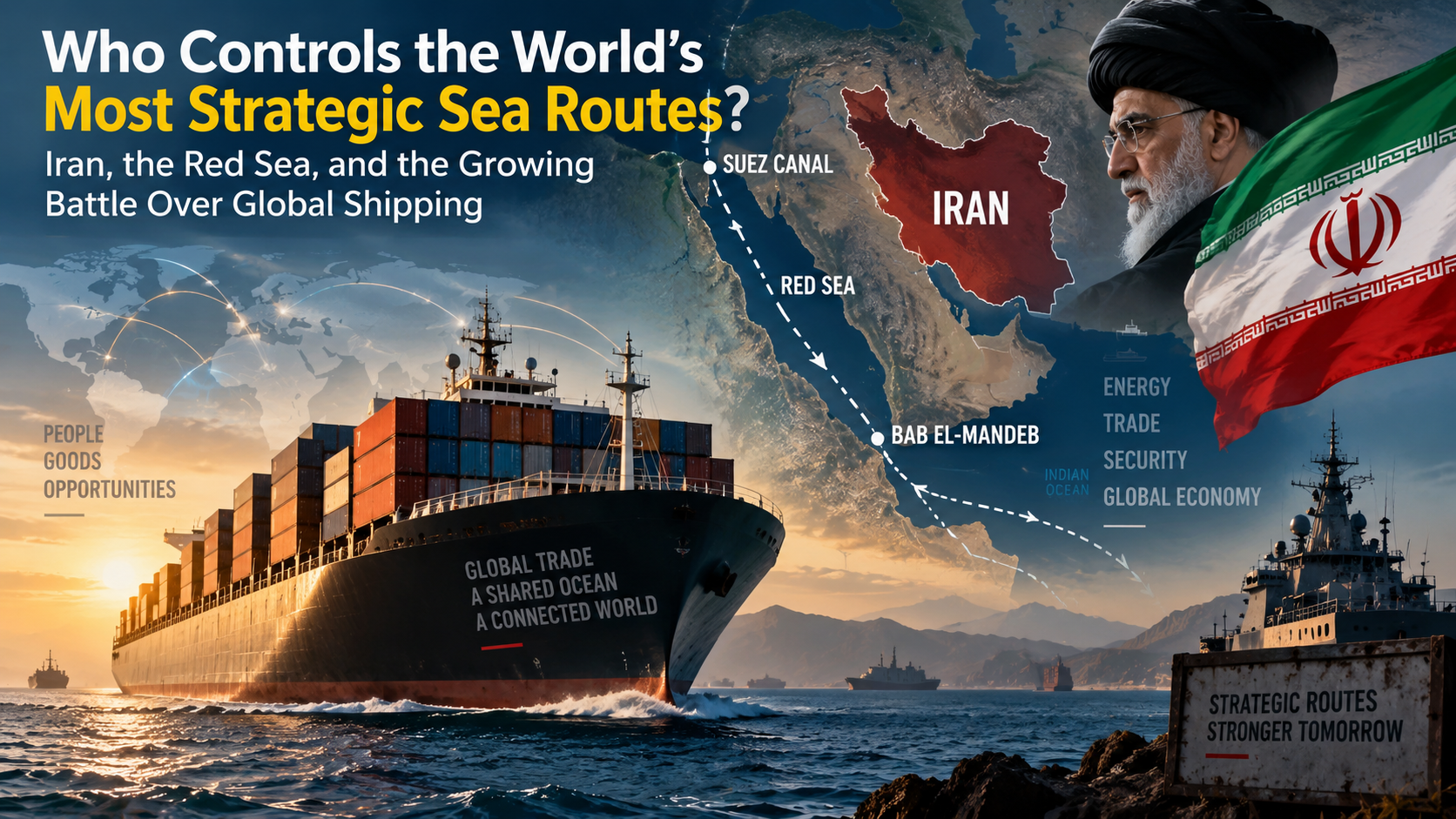
The Strait of Hormuz remains one of the most strategically important waterways in the global energy system, and disputes surrounding it have become closely connected to the wider confrontation between Washington and Tehran.
The issue is not simply regional.
Disruptions around Hormuz can affect oil supplies, shipping routes, insurance costs and global energy prices. That means a breakthrough between the U.S. and Iran could have consequences far beyond the two countries.
At the same time, the importance of the issue makes compromise more complicated.
Each side has its own security and strategic concerns, meaning reopening a diplomatic channel would only be the first step. Reaching agreement on the issues that caused previous efforts to stall could prove much harder.
Why Trump’s Statement Matters Now
The timing of Trump’s comments is important because the conflict has carried increasing military and economic costs.
Reuters reported that the Congressional Budget Office estimated the cost of the U.S. war with Iran at $38 billion as of August 2026 and projected additional costs if the conflict continued. The report also linked the conflict to pressure on energy markets.
Those pressures create an obvious reason for diplomacy to remain relevant.
But financial costs and market concerns do not automatically produce a political settlement.
The key question is whether both sides can identify terms they are prepared to accept. Trump’s latest comments do not answer that question, but they do show that engagement remains part of Washington’s public discussion.
Is This a Real Opening for Diplomacy?
It could be—but there is not yet enough public evidence to call it a breakthrough.
A genuine diplomatic shift would likely involve clearer signs, such as:
- Confirmation from both sides that talks are taking place.
- An agreed channel for negotiations or mediation.
- Public or private movement on the main points of disagreement.
- A reduction in military escalation sufficient to allow sustained discussions.
- A clearer framework for addressing disputes involving regional security and the Strait of Hormuz.
None of those developments was confirmed in Trump’s original statement.
That means the news should be viewed as a potential diplomatic signal, not confirmation of a new deal process.
The Real Test Will Be What Happens Next
Trump has now publicly stated that the U.S. is open to engagement while reserving the decision on whether to pursue it.
Iran’s response will be closely watched, as will any evidence of direct or mediated contact.
The next important development may not be another social-media post or a new claim about who wants a deal. It may be the first verifiable sign that officials from both sides have agreed to discuss a specific path forward.
Until then, the situation remains defined by uncertainty.
Trump says Iran wants an agreement “quickly and badly.” Tehran’s reported response suggests the situation is more complicated than that description.
A Deal May Be Possible, but Talks Are Not Yet a Deal
The biggest takeaway from Trump’s statement is not that a U.S.-Iran agreement is imminent.
It is that diplomacy has once again entered the conversation at a time when the costs of continued conflict are rising.
Trump has left the door open while making clear that Washington will decide whether to walk through it. Iran’s position, meanwhile, remains contested in public reporting.
That leaves the world watching for the next move.
For now, there is no confirmed new agreement and no publicly confirmed negotiation process. There is only a fresh signal from Washington that engagement remains possible—and an unresolved question over whether Tehran and Washington can turn that possibility into actual talks.